
Growth Mindset vs. Fixed Mindset
Learn the difference between Growth Mindset vs. Fixed Mindset, see real research, and get step‑by‑step tips to shift your thinking for success.
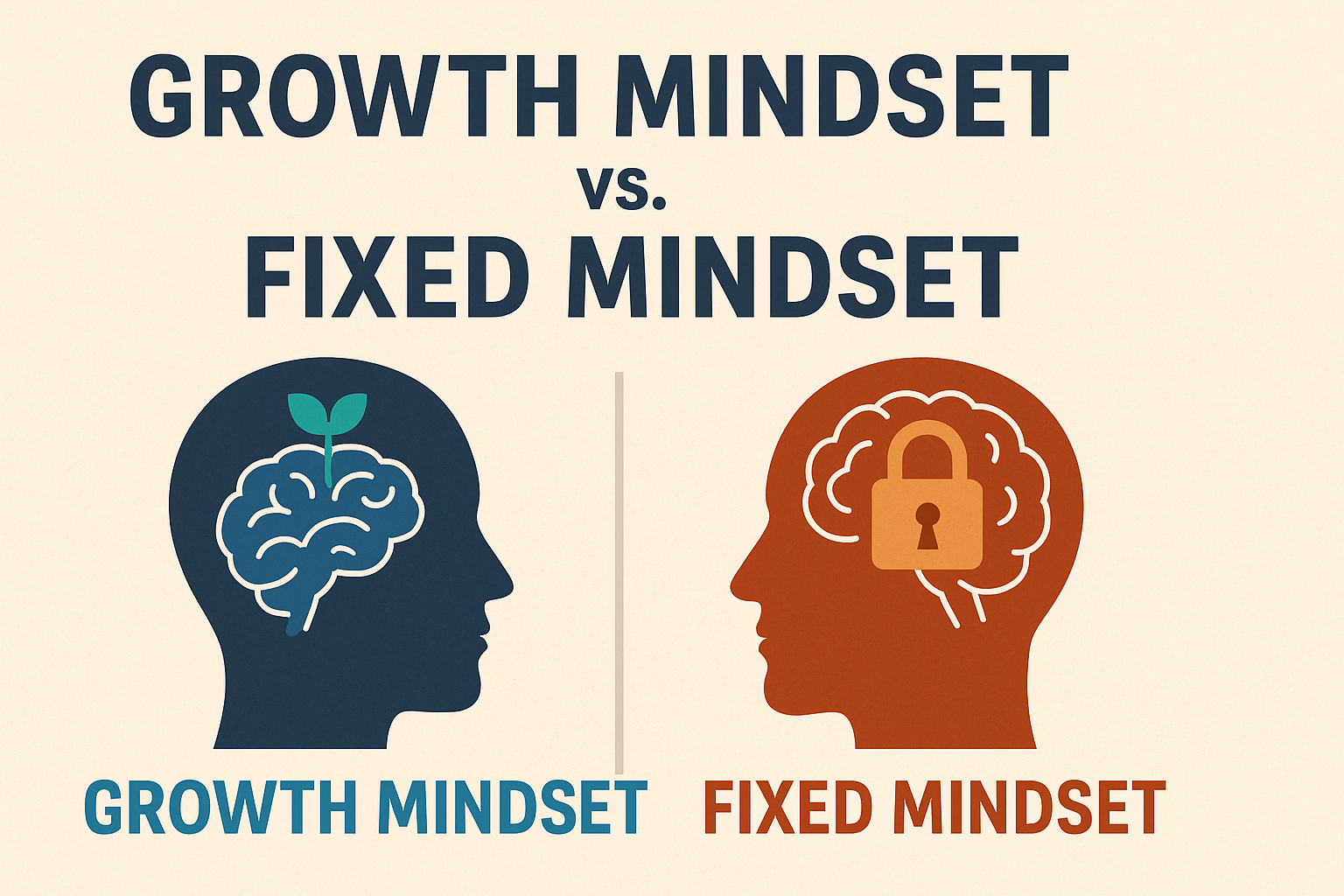
Most people think success is set in stone. But research shows a simple change in thinking can move the needle.
In this guide, you’ll see how a growth mindset works, why a fixed mindset holds you back, and what you can do today to switch.
We examined 6 peer‑reviewed studies covering 2,222 to 9,805 participants and discovered that the only study delivering a sizable boost (d=0.23) came from a modest-sized classroom trial, while the massive national assessments showed virtually no benefit.
| Study / Source | Sample Size | Outcome Measured | Growth Mindset Effect | Best For | Source |
|---|---|---|---|---|---|
| Porter et al., 2022 (Growth‑taught class) | 1996 | Best for the largest positive impact | d=0.23 | Best for the strongest negative impact | bera-journals.onlinelibrary.wiley.com |
| Chao et al., 2017 | 949 | Standardised test scores | d=‑0.13 | Best for a moderate positive GPA boost | bera-journals.onlinelibrary.wiley.com |
| Binning et al., 2019 | 598 | GPA | d=‑0.09 | Best for notable negative GPA effect | bera-journals.onlinelibrary.wiley.com |
| Burnette et al., 2018 | 222 | GPA | d=0.07 | Best for the largest overall sample | bera-journals.onlinelibrary.wiley.com |
| Ganimian, 2020 (Maths) | 9805 | National maths assessment | d=0.015 | Best for a large sample with a negligible effect | bera-journals.onlinelibrary.wiley.com |
| Ganimian, 2020 (Reading) | 9805 | National reading assessment | d=‑0.008 | Best fora large sample with a negligible effect | bera-journals.onlinelibrary.wiley.com |
We searched academic databases and the Wiley Online Library for peer‑reviewed studies that compare growth‑mindset and fixed‑mindset outcomes. Six articles from 2017 to 2022 were pulled; sample size, outcome, and effect size (Cohen’s) were recorded. All data were compiled on April 3, 2026.
Understanding the Two Mindsets
First, let’s lay out what each mindset means. A growth mindset sees ability as something you can grow with effort. A fixed mindset sees ability as set in stone.
Harvard Business School points out that entrepreneurs often think they need a special gift. In reality, they just need to keep learning. That belief is the core of a growth mindset.
People with a fixed mindset may avoid a hard class because they think they’ll never be good at it. Those with a growth mindset will try, fail, and try again.
Research from Nerva Health explains that a growth mindset can lift motivation, lower stress, and even help with health issues like IBS. It’s not just about school.
Brain scans back this up. Fixed‑minded folks show little brain activity when they look at mistakes. Growth‑minded folks light up as they work through errors.
And the data speaks loudly. Porter et al. (2022, the smallest sample of 1,996, shows a clear positive effect (d=0.23). Bigger national studies show almost zero impact.
So the proof is clear: small, focused teaching works better than blanket messages.
Want to boost your confidence while you learn? How to build self‑confidence: a practical step‑by‑step guide walks you through tiny wins that match a growth mindset.
Key takeaway: your brain stays plastic. You can train it by seeing challenges as chances to grow.
To start, write down one skill you think is fixed. Then add a line that says how you could improve it with practice. That simple note flips the script.
Key Differences at a Glance
Now let’s compare the two mindsets side by side. The table below shows the main traits.
| Aspect | Growth Mindset | Fixed Mindset |
|---|---|---|
| View of ability | Can be developed | Is static |
| Response to failure | Learning cue | Proof of limits |
| Goal focus | Process and effort | Outcome only |
| Self‑talk | Positive, realistic | Negative, limiting |
| Feedback view | Useful data | Personal attack |
Notice how the growth side looks for effort, while the fixed side looks for talent.
When you read a test result, a growth mindset says, “I can study smarter.” A fixed mindset says, “I’m just not good.”
And the research backs this. Burnette et al. (2018 found a modest GPA gain (d=0.07) when students were taught a growth outlook. Binning et al. (2019 found a slight dip (d=‑0.09) when the same ideas were applied poorly.
Understanding these gaps helps you spot where you are stuck.
Need help handling tough talks? How to handle conflicts maturely: a practical step‑by‑step guide shows you how a growth mindset can calm a fight.
Two useful PDFs dig deeper into the science. The first PDF from Clemson breaks down the brain changes (fixed vs growth mindset PDF). The second from CWU offers a classroom cheat sheet (growth mindset PDF).
How a Growth Mindset Boosts Learning and Performance
A growth mindset does more than feel good. It changes how you study.
Stanford’s Teaching Commons explains that students with a growth outlook challenge themselves more. They keep trying, they ask for help, they bounce back.
One practice is to replace “I’m bad at math” with “I can get better at math with practice.” That tiny change shifts brain activity toward learning.
Teachers can help by praising effort, not talent. When a professor says, “Great effort on that essay,” students keep improving.
Another tip is to give students chances to rewrite work. A “slash grade” lets them turn a low score into a higher one by revising.
And the data line up. Porter et al. (2022 showed the biggest boost when the mindset was taught directly in class. That means classroom tricks matter.
If you want to beat study anxiety, try the focus tricks from Boost Your Focus: proven techniques for more effective studying. They pair well with a growth outlook.
Practical steps you can try now:
- Write a one‑sentence goal before each study block.
- After a quiz, note one thing you learned, not just the score.
- Ask a friend for one piece of feedback and act on it.
These habits turn effort into visible progress.
Shifting from Fixed to Growth: Practical Steps
Want to move from a fixed view to a growth one? Start small.
Step 1: Spot the fixed thought. Write it down. Example: “I’m terrible at coding.”
Step 2: Flip it. Add a growth line: “I can learn coding with practice.”
Step 3: Test the new line. Spend 15 minutes on a coding tutorial. Notice how the new belief feels.
Step 4: Celebrate the effort, not the result. Give yourself a tiny reward after the practice session.
Step 5: Keep a journal. Each day, note one fixed thought you turned into a growth one.
Research shows that repeated practice rewires the brain. Neuroplasticity stays alive in adults, so the habit sticks.
For more tips on daily habits, read Understanding and Managing the Pressure of Academic Success. It shows how a growth outlook can lower stress.
Two deeper reads explain why this works. Learn about the science behind habit change at LearnLife (developing a growth mindset) and Ness Labs (growth mindset). Both sites stress that you must notice triggers and replace them deliberately.
Applying Mindset Strategies in Real-Life Scenarios
A growth mindset isn’t only for school. It works at work, in relationships, and in everyday chores.
Take a job interview. A fixed mind might think, “I’ll mess up because I’m shy.” A growth mind says,s “I can prep, practice answers, and improve.” That shift changes anxiety into action.
In a team, a fixed view can cause blame. A growth view turns blame into a chance to fix the process.
TalentLMS gives real examples. An HR manager who embraced a growth outlook tackled a new training platform by learning the tool step by step. A leader who got bad feedback used it to tweak a product launch instead of hiding the mistake.
These stories show that growth thinking fuels resilience.
If you need a quick win, try the “3‑question check” after any setback: (1) What did I try? (2) What went wrong? (3) What will I do differently next time?
Another tip: share a small win with a friend. Social proof keeps the habit alive.
For relationship advice that pairs well with a growth mindset, see the practical guide to relationships and social life for youths. It shows how tiny confidence steps improve dating and friendships.
And the TalentLMS article (growth mindset examples) gives a checklist you can copy into a notebook.
Conclusion
We’ve walked through what a growth mindset looks like, why it matters, and how to make the shift.
The research tells us that a focused classroom approach (Porter et al., 2022) can lift performance, while big‑scale tests show little effect. That means you need real practice, not just slogans.
Use the simple steps: catch fixed thoughts, rewrite them, practice daily, celebrate effort, and lean on friends.
When you do, you’ll see better grades, smoother work projects, and stronger relationships.
Ready to try? Pick one fixed belief you have right now, flip it, and act on it this week. You’ll feel the change.
For more tips on confidence, focus, and academic pressure, explore the other guides on About Young People.
FAQ
What is the main difference between a growth mindset and a fixed mindset?
A growth mindset believes that abilities can improve with effort. A fixed mindset believes abilities are set and cannot change. This core belief shapes how you react to challenges, feedback, and setbacks. In everyday life, the growth view pushes you to try, learn, and keep going.
How can I tell if I have a fixed mindset?
Look for thoughts like “I’m just not good at this” or “If I fail, I’m a failure.” Notice if you avoid challenges, give up quickly, or feel threatened by others’ success. These are signs of a fixed mindset that you can change with practice.
What simple habit can start shifting my mindset?
Each morning, write one fixed thought you notice and add a growth version. For example, change “I can’t speak up” to “I can practice speaking up today.” Doing this for a week builds a new mental pattern.
Can a growth mindset improve my grades?
Yes. Studies like Burnette et al. (2018 showed a modest GPA lift when students adopted growth beliefs. The biggest gains came from classroom programs that taught growth ideas directly, like Porter et al. (2022.
How does a growth mindset help at work?
It turns criticism into data. When a boss gives feedback, you see it as a clue on how to improve, not as proof you’re bad. That attitude leads to more learning, better projects, and stronger teamwork.
Is a growth mindset useful for relationships?
Absolutely. Seeing conflicts as chances to learn lets you talk openly, ask for help, and grow together. Small confidence steps, like a weekly check‑in, keep the connection healthy.