
Your Phone in Class: Ultimate Distraction or Secret Weapon?
Should phones be banned in class? Explore the pros, cons, and smart classroom phone policies that reduce distraction while supporting learning.
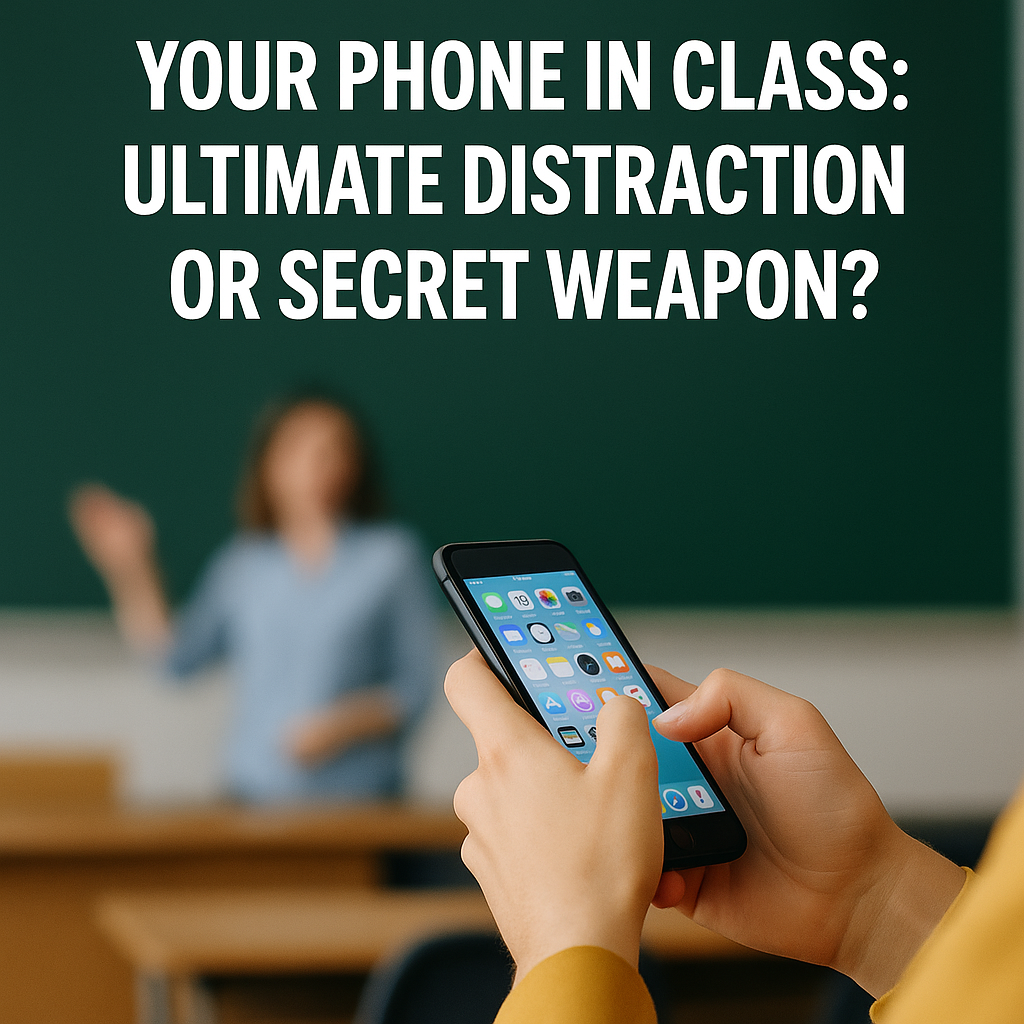
Let’s be real. That moment when your teacher says, “Okay everyone, phones away,” and you feel that tiny, involuntary panic? You’re not alone. It’s like being asked to temporarily amputate a limb. Our phones are our calendars, our cameras, our connection to friends, our stress-relief, and sometimes, sadly, our entire personalities. So, the big debate hitting schools everywhere—should phones be straight-up banned in classrooms?—isn’t just about policy. It’s about our daily reality.
We’ve all been there. You’re trying to listen to a lecture on the causes of World War I, but your pocket vibrates. A meme from the group chat. A TikTok notification. A “u up?” text. Suddenly, you’ve missed five minutes, you’re lost, and you’re deep in an Instagram Stories rabbit hole. The struggle is genuine.
On the flip side, imagine needing to quickly translate a word, fact-check something your teacher said, or collaborate on a shared document with your project group. The phone is a powerhouse tool. So, is the answer an all-out ban, or is it way more complicated?
The Case for the Ban: Why Your Brain Might Thank You
Let’s not sugarcoat it. Our phones are designed by billion-dollar companies to be addictive. Every like, notification, and autopay video is a hit of dopamine. In a classroom, that’s a recipe for constant distraction in school.
1. The Myth of Multitasking: You might think you’re a pro at listening to a lesson while scrolling through Twitter. Science says nah. Your brain is actually task-switching, not multitasking. Every time you glance at your screen, your attention fragments. It takes an average of 23 minutes to fully refocus after a distraction. That’s basically the whole period. The result? You absorb less, your notes are messier, and that homework later? Way harder.
2. The Social Pressure Cooker: Class can be boring. The group chat is not. But being mentally in two places at once is exhausting. It also creates this weird, silent anxiety. Who’s seen your story? Why did they leave you on read during math? This social media anxiety in class chips away at your mental bandwidth for learning.
3. The Comparison Trap & FOMO: Seeing friends post about their seemingly amazing lunch or after-school plans while you’re stuck in chemistry can spark serious FOMO. It subtly tells your brain that what’s happening right here is less important than what’s happening out there.
4. It’s Not Just You: Your phone isn’t just distracting you. The glow of your screen, the sound of typing, or even just knowing you’re on it can pull your neighbor’s attention away, too. Learning is often a collective experience.
The Case Against a Total Ban: Your Pocket-Sized Supercomputer
A blanket ban feels, frankly, a bit old-school. It assumes the worst about us and ignores the reality of how we live and learn. For many, a phone isn’t a luxury; it’s a necessity.
1. Essential Tool for Some Students: For students with certain learning differences or health conditions, phones are lifelines. They can be voice recorders for those who struggle with note-taking, timers for managing focus, or translators for ESL students. A ban can unfairly disadvantage them.
2. Digital Literacy is a Life Skill: The future workplace won’t ask you to power off and put your tech in a cubby. It will demand that you know how to use technology responsibly and productively. Learning to harness your phone’s power for good—research, collaboration, creation—in a controlled setting is a critical 21st-century skill. A ban teaches avoidance, not discipline.
3. Safety and Connection: For many, the phone is a direct family line. Walking home, changing plans, or even just checking in provides a sense of security. A total ban during school hours can create anxiety for both students and parents.
4. It Can Actually Enhance Learning: Used intentionally, phones can be amazing. Quick polls with Kahoot!, virtual field trips via VR apps, photographing a complex diagram on the board, using a note-taking app that syncs across devices, or collaborating on a Google Doc in real-time during a group activity. This is using phones for educational purposes done right.
The Real Talk: It’s Not About the Phone, It’s About the Habit
The core issue isn’t the piece of plastic and glass. It’s our relationship with it. A ban is a quick fix that doesn’t teach us how to build a healthy digital diet. It’s like banning candy instead of teaching nutrition. The second we leave the controlled environment, the unhealthy habits return, stronger.
So, what’s the solution? It’s not a one-size-fits-all rule from above. It’s about creating **classroom phone policies that actually work**—policies built on trust, clarity, and shared goals.
Actionable Insights: How to Make Your Phone Work For You, Not Against You
This is where we move from debate to action. Whether you’re a student wanting to take control, a teacher looking for practical strategies, or just someone trying to figure it out, here’s your “how-to” guide.
For Students: Taking Back Your Focus
1. The Physical Separation Technique: Your willpower is no match for a notification. The single most effective thing you can do is create physical distance.
How-To: Get a simple, cheap phone pocket holder for the wall or a side table. The moment class starts, physically get up and put your phone in it. It’s a ritual that signals to your brain, “Work time.” No holder? Use your bag—zipped up, at the bottom. Out of sight, out of mind.
Pro-Tip: Turn it on Do Not Disturb or Airplane Mode before you put it away. This kills the anxiety of missing something important—you’ve already decided nothing is as important as this class for the next 50 minutes.
2. The “Why” Before the “What”: Before you unlock your phone in class, ask yourself the “Phone Purpose Check”: “What specific task am I using this for?” Is it to:
* Translate a word? (Specific, 10-second task)
* Take a photo of the homework board? (Specific, 10-second task)
* Check a fact related to the discussion? (Potentially okay, but risky)
* “Just check” your notifications? (Vague, dangerous time-suck)
If your answer isn’t a specific, school-related task that will take less than 30 seconds, don’t unlock it.
3. Tech Hygiene Hacks:
Greyscale Mode: Try turning your screen to greyscale (black & white). It makes apps look boring and drastically reduces their addictive pull. (Find it in Accessibility settings).
Notification Triage: Go nuclear on notifications. Turn off *all* social media and game notifications. Let only texts and calls from key contacts (like family) come through.
Use Your Phone as a Tool, Not a Toy: Open your Notes app or a dedicated note-taking app *before* class starts. Have your calculator ready. Be the person who uses tech proactively.
For Teachers & Schools: Building a Culture of Intentional Use
1. Ditch the “Ban,” Create the “Framework”: Instead of a punitive rule, co-create a classroom tech agreement with your students. Discuss on Day One. Ask: “When are phones helpful tools? When are they distractions? What should our shared rules be?”
Example Framework: “Phones in bags/pockets on silent during direct instruction and independent work. Phones out and welcome during designated research, collaboration, or creation times.” Use visual cues: a red card on the board means “phones away,” a green card means “tech is welcome.”
2. Design Lessons That Co-Opt the Tech: Don’t fight the phone; recruit it.
How-To: Build in 5-minute “tech breaks” for a specific purpose. “Okay, for the next five minutes, use your phone to find one surprising fact about the Roman Empire and be ready to share.” Or, “Get into groups and create a one-slide summary of this concept using Canva on your phones.”
Use Polling & Interactive Apps: Tools like Mentimeter or Kahoot! make participation active and fun, using the device for a confined, lesson-specific purpose.
3. Have a Clear, Consistent Protocol for Misuse: If the agreement is “phones away during lecture,” and a student is scrolling, what happens? Avoid public shaming. A calm, private reminder is best. Have a consistent consequence, as the phone goes on the teacher’s desk for the remainder of the period. It’s not personal; it’s about protecting the learning environment for everyone.
The Bigger Picture: Redefining “Connection”
Sometimes, we reach for our phones in class because we’re bored, anxious, or disengaged. The ultimate solution isn’t just about managing the phone; it’s about making the classroom a place worth being mentally present for.
Are lessons interactive? Is there room for discussion and student voice? Do we feel connected to the people in the room with us? Building real, face-to-face community makes the digital world feel less urgent. A funny moment shared with the person next to you beats a meme on a screen any day.
The Bottom Line
Should phones be banned in classrooms? A total ban is like using a sledgehammer to crack a nut. It might solve the immediate distraction, but it breaks a lot of other useful things in the process and doesn’t teach us how to handle the nut next time.
The goal shouldn’t be phone-free schools, but schools that teach focus. It’s about moving from being passive consumers of whatever buzzes in our pockets to becoming intentional directors of our own attention.
Your phone is a tool. An incredibly powerful one. You can let it control your time and focus, or you can learn to control it. The classroom is the perfect training ground. Advocate for smart policies, try the physical separation hack, and challenge yourself to be present. The connection you save might just be your own—to the material, to your classmates, and to your ability to master your own mind.
It’s your education. Your attention is the most valuable thing you have. Who do you want in charge of it—you, or an app?





Phones are both a blessing and a curse. It’s not just about banning them, but about teaching students how to use them responsibly. I think schools could focus more on digital literacy, helping students understand when and how to use their phones in a way that doesn’t hinder their education.