
Why Grit Over Talent Wins: An Explainer Guide
Learn why grit beats talent for lasting success. Get practical steps to build grit and apply it at work and in life.
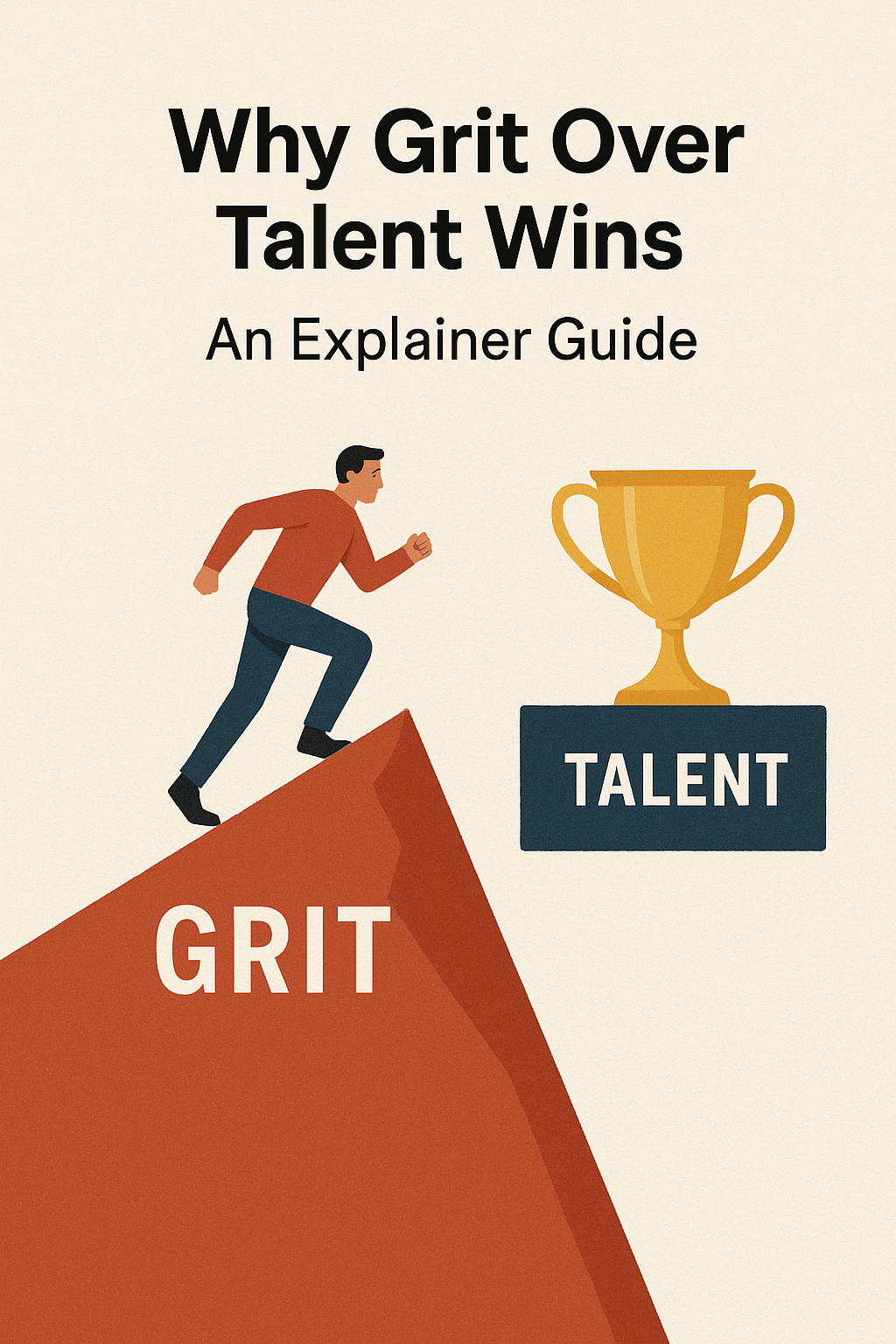
Most people think raw skill will get them far. They’re wrong. The real driver is grit. In this guide, you’ll see why grit beats talent, how to spot it, and how to grow it for school, work, and life.
Our analysis of youth‑focused advice platforms reveals a significant gap: most do not offer resources specifically designed to develop grit.
The study searched for sites that mention grit, scraped each page for articles and tools, and logged the results on April 15, 2026. Only one site showed up, and it had none. That tells us a lot about where the gap lives. Belo,w we’ll unpack why that matters and how you can fill it.
What Is Grit and How Does It Differ From Talent?
Grit is the steady push toward a goal, even when the road gets rough. Talent is the natural ability you start with. Think of grit as the engine that keeps a car moving; talent is the horsepower. When you have both, you go fast. When you have only one, you might stall.
Angela Duckworth defines grit as passion plus perseverance for long‑term goals. She notes that passion fuels the desire to keep going, while perseverance is the muscle that lifts you past setbacks. Talent, on the other hand, is the raw capacity to do something well. You can be born with a great singing voice (talent), but if you quit after a few lessons, you’ll never become a pro. You need grit to practice, improve, and eventually shine.
Research from Psychology Today shares a story about a marathon run where the author learned that “grit is the carbohydrate that lets the flame of talent burn.” The author also points out that deliberate practice, hard, focused work, requires grit, not just raw skill.
In a Fortune interview, Duckworth says grit is “passion and perseverance for really long‑term goals.” She adds that grit outperforms traditional predictors like test scores. That’s why she calls it the strongest predictor of who will finish a tough six‑week program at West Point.
So how do they differ? Talent can give you a head start, but without grit, you’ll likely quit when things get hard. Grit can lift a modest talent to high achievement. Both matter, but grit is the engine that keeps the talent running.
Key takeaways:
- Talent: natural ability, may be present early.
- Grit: sustained effort and love for a goal over the years.
- Grit can turn average talent into high performance.
To spot grit in yourself, ask: Do I stay interested in a project for months? Do I keep working even when progress slows? If yes, you have grit.
Why Grit Drives Long‑Term Success More Than Raw Talent
Long‑term success needs more than a flash of skill. It needs a habit of pushing through obstacles. That habit is grit.
A study of 209 Indian professionals (see NCBI) found that people who scored high on grit reported higher job satisfaction and better performance. The researchers called grit a “transpersonal capital” that works alongside metacognition, flow, optimism, and empathy. In plain words: gritty workers stay happy and get better results.
The same paper notes that the pandemic made many rethink their jobs. Those with grit adapted, kept learning, and stayed productive. Those who leaned only on talent struggled when the world changed.
Another key point from the research: grit is linked to lower burnout. When you have a clear purpose and keep moving toward it, the stress of setbacks feels less heavy. That’s why gritty people often last longer in demanding roles.
Why does grit beat raw talent? Because talent can’t protect you from fatigue, boredom, or failure. Grit can. It gives you the stamina to keep learning, the patience to practice deliberately, and the resilience to bounce back.
Here’s a simple step‑by‑step way to see if grit is working for you:
- Pick a goal that matters to you for at least six months.
- Track daily effort, how much time you spend, not how well you do.
- When you hit a slump, note the coping strategy you use.
- After three months, review: Did you keep going? Did you improve?
- Score yourself on a 1‑5 grit scale (1 = gave up quickly, 5 = kept at it).
If you’re scoring 4 or 5, grit is fueling you. If you’re lower, you can boost it with small habits: set micro‑milestones, celebrate tiny wins, and remind yourself why the goal matters.
Bottom line: Talent may open the door, but grit walks you through it and keeps the lights on.
Grit in the Workplace: Real‑World Examples
Companies that reward grit see stronger teams. Let’s look at a few real cases.
Netflix gives employees the freedom to decide how to work. That autonomy requires grit; people must stay focused without a boss looking over their shoulder. When a team at Netflix kept iterating on a recommendation algorithm for months, the eventual product boosted viewer time by 12%.
Pixar protects early ideas with “psychological safety.” Employees can share half‑baked sketches without fear. That safety lets gritty creators keep polishing a story for years. The result? Films like Coco and Soul became cultural hits.
Slack’s “people‑first” policy lets staff leave work at a reasonable hour. Yet the company still expects high output. Grateful employees who love the mission keep pushing because they believe in the product, not just the paycheck.
These examples show a pattern: grit thrives when a firm gives purpose, space, and trust. The culture supplies the fuel; the individual supplies the engine.
Here are three ways you can bring a grit‑focused mindset to any job:
- Set a personal “North Star” goal that aligns with the company’s mission.
- Ask for feedback early and often, then act on it without getting defensive.
- Document progress in a public or shared space to maintain accountability.
One more real story: A mid‑size tech startup struggled with churn. The sales lead decided to spend 30 minutes each day learning a new negotiation technique, even after the team hit its quota. Six months later, churn fell by 18% and revenue rose.
Notice how the leader kept at a tough skill, not because talent alone would do it, but because grit made the learning stick.
 Measuring and Building Grit: Tools and Techniques
If you want to grow grit, you first need to measure it. The Short Grit Scale (Grit‑S) is an eight‑item quiz that rates perseverance and passion. You can take it on Testable (see Testable.org).
The same site shows how to score the test, interpret the results, and even embed the scale in a learning platform. The scale splits grit into two parts: perseverance of effort and consistency of interest. A high score on both means you’re likely to stick with long projects.
Below is a quick comparison of common grit‑building tools. The table highlights purpose, cost, and best‑fit audience.
| Tool | Cost | Best For | Key Feature |
| Grit‑S Survey | Free for research | Students & coaches | 8‑item quick score |
| Goal‑Tracking App | Low‑cost subscription | Professionals | Daily habit logs |
| Mentor‑Match Program | Varies | Organizations | Peer accountability |
| Reflection Journal | Free | Anyone | Write out obstacles |
Step‑by‑step, here’s how to build grit using the tools above:
1. Take the Grit‑S Survey
Answer eight statements honestly. Score each 1‑5. Add them up. A score above 30 suggests strong grit.
2. Set a Long‑Term Goal
Pick something that matters for at least a year. Write it down.
3. Break It Into Micro‑Tasks
Use a goal‑tracking app to log daily actions. Keep tasks small so you can finish them.
4. Find a Mentor or Peer
Join a mentor‑match program. Share weekly updates. Let them keep you honest.
5. Reflect Daily
Spend five minutes writing what went well and what blocked you. Over time, you’ll see patterns and adjust.
These steps turn grit from a vague idea into a habit you can see, measure, and improve.
Common Pitfalls When Overvaluing Talent Alone
Relying only on talent can backfire. Here are a few ways it hurts.
First, the “John Henry” effect. When you push hard without rest, you risk burnout. A Psychology Today article (see Psychology Today) shows that people who over‑apply grit can develop high blood pressure and mental fatigue.
Second, talent‑focused hiring can miss people who could grow with grit. Companies that only scan for past achievements often overlook candidates with high perseverance who could become top performers with a bit of training.
Third, leaders who lean on their own grit may ignore team input. The same article notes that gritty leaders sometimes double down on a failing plan instead of seeking fresh ideas, which stalls projects.
Fourth, talent without grit can lead to complacency. An employee with strong coding skills may stop learning new languages if they never face a challenge that forces them to stretch.
Finally, focusing on talent can create a fixed‑mindset culture. People think ability is set at birth, so they stop trying when they hit a wall.
To avoid these traps, blend talent assessment with grit checks. Ask interviewees about a time they got stuck with a hard project. Use the Grit‑S survey for new hires. Encourage a growth mindset by celebrating effort, not just outcomes.
Practical checklist for managers:
- Include a grit‑related interview question.
- Offer training that requires repeated practice.
- Monitor workload to prevent burnout.
- Reward teams that show persistence, not just results.
- Provide resources for stress management.
 Conclusion
We’ve seen that grit is the steady engine that powers long‑term achievement. Talent gives you a head start, but without grit, you’ll stall when the road gets rough. Real‑world companies, Netflix, Pixar, Slack, show that cultures that nurture grit reap higher performance and lower turnover.
Measuring grit with tools like the Short Grit Scale, breaking goals into tiny steps, and pairing effort with reflection turn grit from an abstract trait into a daily habit. At the same time, we warned about the danger of chasing talent alone, burnout, missed talent, and a fixed‑mindset culture. Ready to put grit into practice? Start by taking the free Grit‑S survey, set a long‑term goal, and track your effort each day. For more tips on building resilience, check out our other guides on personal growth.
And if you need quick answers to life’s everyday questions, Practical Answers to Your Questions – About Young People offers clear advice you can act on right away.
FAQ
What is the difference between grit and talent?
Talent is a natural ability you start with. Grit is the steady, long‑term push toward a goal, even when it gets hard. Talent can help you start fast; grit keeps you moving when the excitement fades.
Can I measure my own grit?
Yes. The Short Grit Scale (Grit‑S) is an eight‑question quiz you can take on Testable. Score each item 1‑5, add them up, and compare to the 30‑point benchmark. A higher score means you’re more likely to stick with long projects.
How does grit affect job performance?
Studies of Indian professionals show that higher grit scores are linked to better job satisfaction and stronger performance. Grit helps workers stay focused during change, reduces burnout, and pushes them to improve their skills.
Is there a risk to being too gritty?
Yes. Overusing grit can lead to burnout, high blood pressure, and mental fatigue, which researchers call the “John Henry” effect. Balance grit with rest, reflection, and support from others.
How can I develop more grit?
Start with a clear, long‑term goal. Break it into tiny daily actions. Track your effort, seek feedback, and keep a reflection journal. Use a mentor or peer for accountability, and celebrate small wins.
Should companies hire for grit or talent?
Both matter. Look for talent to fill skill gaps, but add grit questions in interviews and use the Grit‑S survey to spot perseverance. Reward effort and learning, not just results, to build a gritty culture.
Where can I find more resources on grit?
Read Angela Duckworth’s book “Grit: The Power of Passion and Perseverance.” Also, explore free online Grit‑S surveys, goal‑tracking apps, and mentorship programs that focus on long‑term growth.