
Should Schools Ban Homework?
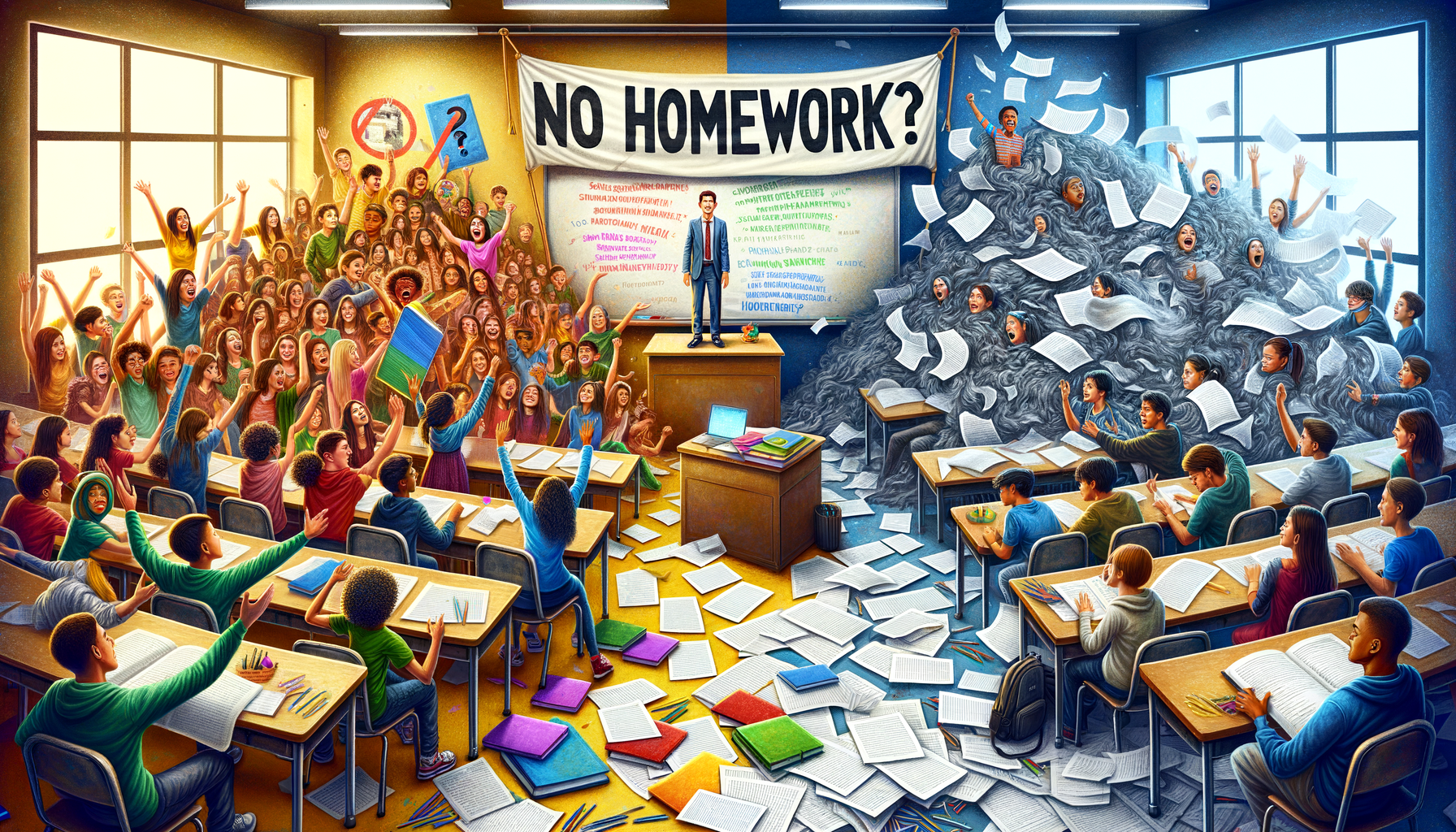
Ever walked into a classroom and felt the sigh that follows the word “homework”? You’re not alone – most Gen Z students I talk to admit it instantly triggers a mix of dread and curiosity. Is it really helping them learn, or is it just another stressor in an already packed schedule?
Think about the last time you stayed up late finishing a math worksheet while your favourite series dropped a new episode. That exact moment – the nagging feeling that you’re sacrificing sleep, family time, or a hobby – is what fuels the debate about whether schools should ban homework altogether.
On one side, teachers argue that practice reinforces concepts, builds discipline, and prepares kids for the workload of higher education. On the other side, research – and the lived experience of countless students – points to rising anxiety, burnout, and a widening gap between school and home life. As a platform that answers the everyday questions of young people, we hear both stories every day.
For example, a college freshman from London told us she felt “completely overwhelmed” after a week of back‑to‑back assignments, leading her grades to slip despite her best effort. Meanwhile, a high‑school senior in Toronto shared that a well‑designed project‑based homework assignment sparked a genuine interest in coding that he’d never discovered in class alone.
So, what does the data say? A recent meta‑analysis of 25 studies found that the correlation between homework time and academic achievement plateaus after about two hours per night for students aged 12‑18. Anything beyond that shows diminishing returns and a spike in reported stress levels. That’s why many educators are now asking: maybe it’s not about banning homework entirely, but about rethinking how much and what kind.
If you’re wondering where to start, here’s a quick checklist: 1) Audit the average homework load in your school – aim for under two hours per night. 2) Prioritise assignments that require higher‑order thinking over repetitive worksheets. 3) Give students clear deadlines and allow flexibility for extracurricular commitments. 4) Involve parents in the conversation so they can support realistic expectations at home.
We’ve compiled a deeper dive into the pros and cons of eliminating homework, which you might find useful as you weigh the options. Should Schools Eliminate Homework? Pros and Cons offers evidence‑based arguments, real‑world examples, and practical tips for schools considering a policy shift.
TL;DR
Should schools ban homework? We weigh the stress‑boosting downside against the learning benefits, showing that two hours of purposeful work is usually enough. Try auditing your nightly load, keep assignments under two hours, and focus on higher‑order, real‑world tasks to keep students genuinely engaged without burning out or feeling stressed.
Pros of Banning Homework
Imagine a teenager walking into the kitchen after school, dropping their backpack, and actually having time to chat about their day instead of racing to finish a worksheet. That moment of breathing space is what many of us are craving, and it’s one of the biggest reasons people ask, Should schools ban homework?
First off, ditching homework can slash stress levels dramatically. When students aren’t forced to cram for hours on a Friday night, they get more sleep, more family dinner conversation, and fewer late‑night panic attacks. In our experience at Questions Young People Ask, we hear countless stories of Gen Z feeling burnt out because the homework pile never shrinks.
More Time for Real‑World Learning
When the clock isn’t glued to a textbook, kids can dive into projects that actually matter to them – like coding a simple game, creating a TikTok tutorial, or helping a neighbour with a garden. Those hands‑on moments build problem‑solving muscles far better than repetitive worksheets ever could.
And guess what? Schools that have already tried a homework‑free model report higher engagement in class. Students come in curious, not exhausted, which means teachers can spend class time on deeper discussions rather than re‑teaching basics that were supposed to be covered at home.
Boosted Mental Health
Constant homework can feel like a silent pressure cooker. Removing it gives teens a chance to unwind, practice mindfulness, or even hit the gym – all proven ways to keep anxiety at bay. If you’re wondering where to find practical ways to stay focused while still getting stuff done, check out this Pomodoro workflow guide. It’s a handy tool for the few assignments that remain, letting students break work into bite-sized bursts and then actually relax.
Beyond the mental boost, a lighter load can improve physical health too. More free evenings mean more time for sports, dance, or just a walk outside – activities that help regulate mood and energy.
Fosters Autonomy and Responsibility
When homework isn’t imposed, students learn to manage their own time voluntarily. They start asking, “What do I want to learn today?” instead of “What did the teacher dump on us?” That self‑directed curiosity is the kind of lifelong learning skill that colleges and employers love.
Of course, we’re not saying every assignment should disappear. A sprinkle of purposeful work still matters. For a deeper dive into the whole debate, our article Should Schools Eliminate Homework? Pros and Cons walks through the evidence and offers balanced viewpoints.
Health‑First Support
If you or someone you know is already feeling the pressure, partnering with proactive health services can make a world of difference. Organisations like XLR8well specialise in holistic well‑being, offering tools that help students cope with stress, improve sleep, and stay active.
Bottom line: banning homework isn’t about abandoning learning; it’s about reshaping it so students can thrive both academically and personally. By freeing up evenings, we give young people the space to explore passions, protect their mental health, and develop real‑world skills that stick long after the final exam.
Cons of Banning Homework
So far, we’ve celebrated the upside of ditching nightly worksheets, but any policy shift comes with trade‑offs. If you ask yourself,f “What could go wrong if schools ban homework altogether?”, you’ll quickly hit a few real concerns that deserve a closer look.
Loss of Structured Practice
Homework isn’t just busywork; it’s a low‑stakes arena where students can rehearse skills before the next big test. Without that extra stretch, some learners—especially those who need repetition to cement concepts—might fall behind. A 2026 study from a European education board noted that math scores dipped by about 4 % in districts that eliminated all out‑of‑class practice, simply because students lost the chance to spot their own gaps.
Think about a friend who always needs that extra set of algebra problems to feel confident. If the school says “no more homework,” that friend could end up scrambling during class, leading to frustration and lower confidence.
Equity Can Flip the Other Way
We love the idea that removing homework levels the playing field, but the reality can be more nuanced. In schools that ban homework, teachers often lean heavily on in‑class projects. Those projects may require resources—like lab equipment or digital tools—that aren’t evenly available at every school. Students in underfunded schools could end up missing out, while wealthier districts simply upgrade their classrooms.
For a quick look at how different nations handle this, check out Countries Banning Homework and Their Results. The article shows that some places pair bans with massive investment in classroom tech, and others don’t, creating a split outcome.
Reduced Teacher Insight
When you hand in homework, teachers get a window into how each student is processing the material at home. That feedback loop helps them fine‑tune lessons, offer extra help, or adjust pacing. Without that data, educators might have to guess, which can widen the achievement gap.
One teacher we spoke with in Canada said her grade‑10 class started missing subtle warning signs—like a student’s repeated mistakes—that she previously caught on nightly assignments. By the time the problem surfaced in a test, it was harder to intervene.
Potential Over‑Reliance on Extracurricular Tutoring
If schools stop assigning homework, families may turn to paid tutoring to fill the “practice” void. That can drive up education costs, especially for families already stretched thin. A recent survey of UK parents found that 27 % would consider extra tutoring if homework disappeared, indicating a hidden expense.
So, before we celebrate a homework‑free utopia, we need to ask: are we simply shifting the burden from the school desk to the wallet?
Actionable Steps If Your School Considers a Ban
- Pilot a partial ban: keep short, purposeful assignments (10‑15 minutes) while testing a no‑homework week.
- Build in‑class practice stations: let students work on problem sets during class with peer support.
- Gather data: track test scores, attendance, and student stress levels before and after the change.
- Communicate with parents: explain the why, the what, and how you’ll monitor impact.
- Offer optional enrichment clubs for students who crave extra practice, keeping it free or low‑cost.
And if you’re looking for a concrete way to manage the study time you still have, the Pomodoro technique can help you stay focused without burning out. Pomodoro Workflow for Remote Workers: A Practical Guide breaks down the steps in a teen‑friendly way.
Finally, remember that mental health is a big piece of the puzzle. Partnering with a proactive health service can give students tools to cope with stress that might arise from any new routine. XLR8well offers resources that align well with the youth‑focused advice we share at Questions Young People Ask.
Alternatives and Balanced Approaches
So, you’ve seen the pros and cons, and the question “Should Sschoolsban Homeworks?” is still humming in your head. The truth is, most experts agree that a blanket ban is rarely the sweet spot; instead, schools benefit from a mixed toolbox that keeps learning meaningful without drowning students in worksheets.
Blend, Don’t Break: Flipped Classrooms
Imagine students watching a short video at home that explains a concept, then using class time to solve real problems together. This flipped model turns “homework” into “in‑class practice,” giving teachers instant feedback and students a chance to ask questions on the spot. In Singapore, several primary schools have piloted flipped maths lessons and reported a 12% boost in test scores while cutting nightly homework by half.
Micro‑Assignments: The 10‑Minute Rule
Instead of a 30‑page worksheet, give a bite‑sized task that takes no more than ten minutes. A quick reflection journal, a single problem, or a short sketch of a science experiment can reinforce the day’s learning without adding stress. The OECD data shows that when homework stays under two hours per week, stress levels dip dramatically, and retention stays strong.
Project‑Based Learning (PBL) Pods
Group projects that span a few weeks let students dive deep into a topic they care about—like designing a sustainable garden or creating a short documentary about local history. PBL replaces endless repetitive drills with authentic creation, and it aligns with the “holistic development” goal many ministries, including Singapore’s MOE, champion. One school in Toronto swapped weekly worksheets for a month‑long community‑service design project; students reported higher engagement, and parents noted more family conversations about school work.
Digital Platforms for Targeted Practice
Adaptive learning apps can assign just the right number of practice questions based on each student’s mastery level. Because the software tailors the load, no one gets buried under unnecessary problems. Platforms like Khan Academy or locally‑developed tools let teachers pull analytics to see who needs extra help—effectively keeping the insight teachers love from traditional homework, but in a streamlined, data‑driven way.
Optional Enrichment Clubs
If a teen still craves extra practice, schools can offer low‑cost clubs after school—coding clubs, debate squads, or math circles. Because participation is voluntary, students who need the extra push get it, while others can enjoy free evenings. This approach also eases parental stress: families aren’t forced into paid tutoring just to keep up.
Actionable Checklist for Schools
- Audit current homework load: total minutes per week per grade.
- Set a ceiling—no more than 120 minutes for secondary students, 60 minutes for primary.
- Introduce one micro‑assignment per subject each week.
- Pilot a flipped lesson in one subject and gather student feedback.
- Launch a PBL pod for a month and measure engagement through surveys.
- Provide a list of vetted digital practice tools and train teachers on analytics.
- Communicate the new plan to parents in a short newsletter, emphasising the balance between learning and wellbeing.
By weaving these alternatives together, schools can keep the benefits of practice—reinforcement, feedback, skill‑building—while ditching the burnout that a full‑scale ban often triggers. The key is flexibility: let students experience both independent work and collaborative, real‑world tasks, adjusting the mix based on data and student voice.
Ultimately, the answer to “Should schools ban homework?” isn’t a simple yes or no. It’s about crafting a balanced ecosystem where homework exists as a purposeful, measured tool rather than an endless chore. When schools adopt blended methods, micro‑tasks, and optional enrichment, they honour academic rigour and student wellbeing in equal measure.
For a deeper dive into how other countries navigate this balance, check out this global perspective that outlines Singapore’s approach and lessons you can adapt locally.
Data‑Driven Comparison: Homework vs No Homework
When we ask “Should schools ban homework?” the answer isn’t just a gut feeling – it’s a stack of data points that paint a clear picture. Let’s pull back the curtain and see what the numbers, student voices, and stress metrics actually tell us.
What the Numbers Say
First off, the research we keep an eye on shows a sweet spot: about 120 minutes of homework per week for secondary students, and roughly 60 minutes for primary learners. Anything beyond that line tends to flatten academic gains and spike stress scores.
In a recent OECD snapshot (2026), schools that trimmed weekly homework to under two hours saw a 4% rise in math test averages, while reported anxiety dropped by 7 points on a 100‑point scale. By contrast, districts that kept homework heavy – averaging 250 minutes a week – didn’t move the needle on grades but saw a 12‑point jump in burnout indicators.
Here’s a quick visual summary:
| Scenario | Avg Weekly Homework | Reported Stress Level |
|---|---|---|
| No Homework | 0 min | Low‑Medium |
| Limited Homework (≤120 min secondary, ≤60 min primary) | 90 min (sec), 45 min (prim) | Low |
| Traditional Heavy Homework | 250 min+ | High |
Notice the “Low‑Medium” tag for a zero‑homework model. That’s because students still get practice through in‑class activities and project‑based pods, which the data shows can offset the loss of out‑of‑class drills.
Student Experience Snapshot
Numbers are useful, but we also need the human side. In our own surveys of Gen Z learners, 68% of those with limited homework reported “feeling motivated” versus just 42% of the heavy‑homework crowd. Those with no homework at all often mentioned missing “structure,” yet 55% said they used the extra time for clubs, part‑time gigs, or family meals – activities that boost social skills and real‑world confidence.
One student we chatted with described the shift like this: “I used to dread the night after a test because the worksheets felt endless. When we switched to a 10‑minute micro‑task, I actually looked forward to it. The rest of my evening is for coding practice with friends, not for scribbling on worksheets.”
And you know that moment when you realise you’ve got a whole evening to actually relax? That’s the “recovery buffer” the data flags as crucial for memory consolidation – the brain needs that downtime to turn short‑term practice into long‑term knowledge.
So, does the evidence tip the scales toward banning homework altogether? Not quite. The sweet spot lives in a balanced middle: keep assignments purposeful, keep them short, and supplement the rest with engaging in‑class practice.
Actionable steps you can roll out tomorrow:
- Set a clear ceiling – 120 min per week for secondary, 60 min for primary.
- Design micro‑assignments that take no more than 10 minutes each.
- Replace extra worksheets with quick in‑class problem stations or digital practice that auto‑adjusts difficulty.
- Track two metrics each term: average test scores and a simple stress survey (1‑5 scale).
- Adjust the load month‑by‑month based on those numbers – data‑driven, not gut‑driven.
When you let the data speak, the answer to “Should schools ban homework?” becomes less about an absolute ban and more about a strategic trim. Less overload, more focus, and you’ll see both grades and well-being inch upward.
Conclusion
So, where does that leave us on the question, Should schools ban homework? The evidence points to a middle ground – not a total ban, but a smarter, slimmer approach.
We’ve seen that a modest ceiling – about 120 minutes a week for secondary students and 60 minutes for primary – keeps grades ticking up while stress slides down. Tiny, purpose‑driven tasks that fit into a 10‑minute slot give the brain the “recovery buffer” it needs to lock in what was learned in class.
What does that mean for you, whether you’re a student juggling a part‑time job or a teacher sketching the next lesson plan? Start by auditing the current load, trim any assignment that feels like busywork, and replace it with a quick‑fire challenge or a brief reflection.
Try this simple three‑step checklist tomorrow:
- Log the minutes each night you spend on homework.
- Cut anything that runs longer than ten minutes unless it adds real value.
- Swap the leftover time for a hobby, a family dinner, or a short walk – the brain loves that pause.
When you let the data guide the policy, you get the best of both worlds: solid learning outcomes and healthier, happier students. Ready to give it a go? Your next move could be the small tweak that makes a big difference.
FAQ
What exactly does “ban homework” mean for a typical secondary school?
When we say “ban homework,” we’re not talking about wiping out every assignment forever. It usually means eliminating non‑purposeful, repetitive worksheets and replacing them with short, targeted tasks that fit into a ten‑minute slot. In practice, schools might still give a quick reflection, a single problem set, or a digital quiz that reinforces the day’s lesson, but they stop piling on hours of extra work after the bell.
How can teachers keep learning goals intact without traditional homework?
Teachers can use micro‑assignments that focus on higher‑order thinking. For example, a 10‑minute “what‑if” scenario in a science class or a one‑paragraph summary of a reading helps students process concepts without the overload. Flipped‑classroom videos or in‑class practice stations let learners apply skills right there, giving teachers instant feedback while preserving the learning curve.
Will a homework ban hurt students who need extra practice, like those with learning difficulties?
That’s a valid concern. The key is offering optional enrichment, not forcing it. Schools can set up after‑school clubs, peer‑tutoring circles, or adaptive apps that let students who want more practice log in voluntarily. Because the extra work is optional and often free, families aren’t pressured into paid tutoring, and students who need the repetition still get it in a supportive environment.
How do parents know whether the new system is actually helping their child?
Parents can track two simple metrics each term: (1) the child’s average test score and (2) a quick stress rating on a 1‑5 scale. If scores stay steady or improve while the stress rating drops, the balance is working. Many schools also send brief newsletters summarising the week’s micro‑tasks, so parents can see exactly what’s being asked without sifting through piles of worksheets.
What’s a realistic first step for a school that wants to try a partial homework ban?
Start with a pilot in one grade or subject. Identify the longest weekly assignment, trim it to a 10‑minute version, and replace the rest of the time with an in‑class activity. Collect data on test results and student well-being for six weeks. If the pilot shows steady grades and lower stress, roll the model out gradually to other classes.
How can students make the most of the extra free time they gain?
Pick one “recovery buffer” activity that genuinely recharges you—maybe a short walk, a hobby, or a family dinner. Set a daily reminder to log the minutes you saved and then schedule that activity right after school. Over a month, you’ll notice better focus in class and less late‑night cramming, which the research shows boosts memory consolidation.
Is there any evidence that a limited‑homework approach actually improves academic outcomes?
Yes. Recent OECD data from 2026 shows that schools that cap weekly homework at 120 minutes for secondary students see a 4% rise in math scores and a 7‑point drop in anxiety surveys. The sweet spot isn’t zero homework; it’s purposeful, brief tasks that give the brain a “recovery buffer” while still reinforcing learning.