
Ways to Get an Internship Without a GPA Requirement
You’re staring at an application form. There’s a field for GPA. Your number isn’t high. You feel like closing the tab. Despite the pressure of academic success, here’s the truth: many internships don’t care about your GPA. They care about what you…

You’re staring at an application form. There’s a field for GPA. Your number isn’t high. You feel like closing the tab.
Despite the pressure of academic success, here’s the truth: many internships don’t care about your GPA. They care about what you can do. In 2026, dozens of paid programs explicitly ignore grades. And even when they ask, you can still win.
This guide shows you five proven ways to get an internship without a GPA requirement. You’ll learn how to build a portfolio, network the right way, write a resume that hides your GPA, find companies that don’t filter by it, and ace interviews that test skills, not grades. Let’s go.
Step 1: Build a Skill Portfolio That Speaks Louder Than Grades
Grades show you can pass tests. A portfolio shows you can do real work. Employers want the second one.
Start with projects. If you’re in marketing, create a mock campaign for a local business. If you’re in coding, build a simple app or a website. If you’re in design, design a logo or a brochure. Post everything online.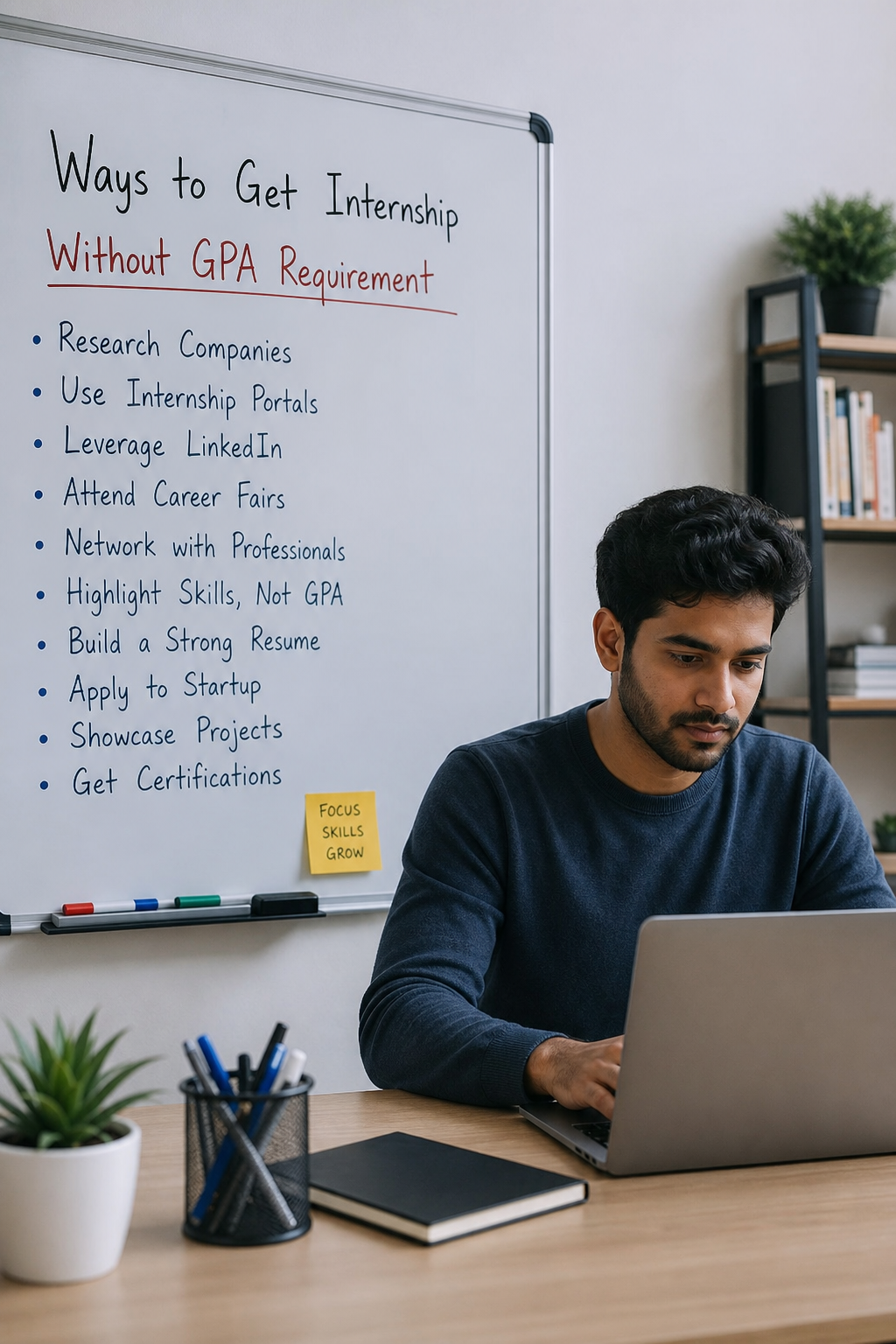
Use free platforms. GitHub for code. Behance for design. A simple Google Site for anything else. Link to your portfolio in every application.
Pro Tip: Pick one project that solves a real problem. For example, build a tool that helps students find cheap textbooks. It shows initiative and skill.
You can also do freelance work. Sites like Upwork or Fiverr let you take small gigs. Even one paid project proves you can deliver.
Another idea: volunteer your skills. Nonprofits always need websites, social media help, or data entry. That counts as experience.
Key Takeaway: A portfolio of 2-3 solid projects beats a 4.0 GPA every time.
Remember: when you apply with a portfolio, employers see proof. They don’t need to guess if you can do the job. They see it.
One student I know had a 2.8 GPA but built a website for a local bakery. She got three internship offers. Her portfolio did the talking.
Start this week. Pick a skill you want to learn. Build something small. Then show it.
Bottom line: A strong portfolio of real projects bypasses GPA filters because it proves you can deliver results.
Step 2: Network Your Way Into Opportunities
Networking is the highest-conversion tactic for landing an internship without a GPA requirement. According to research, employee referrals have the highest applicant-to-hire conversion rate. That means someone who knows you can pull you through the door.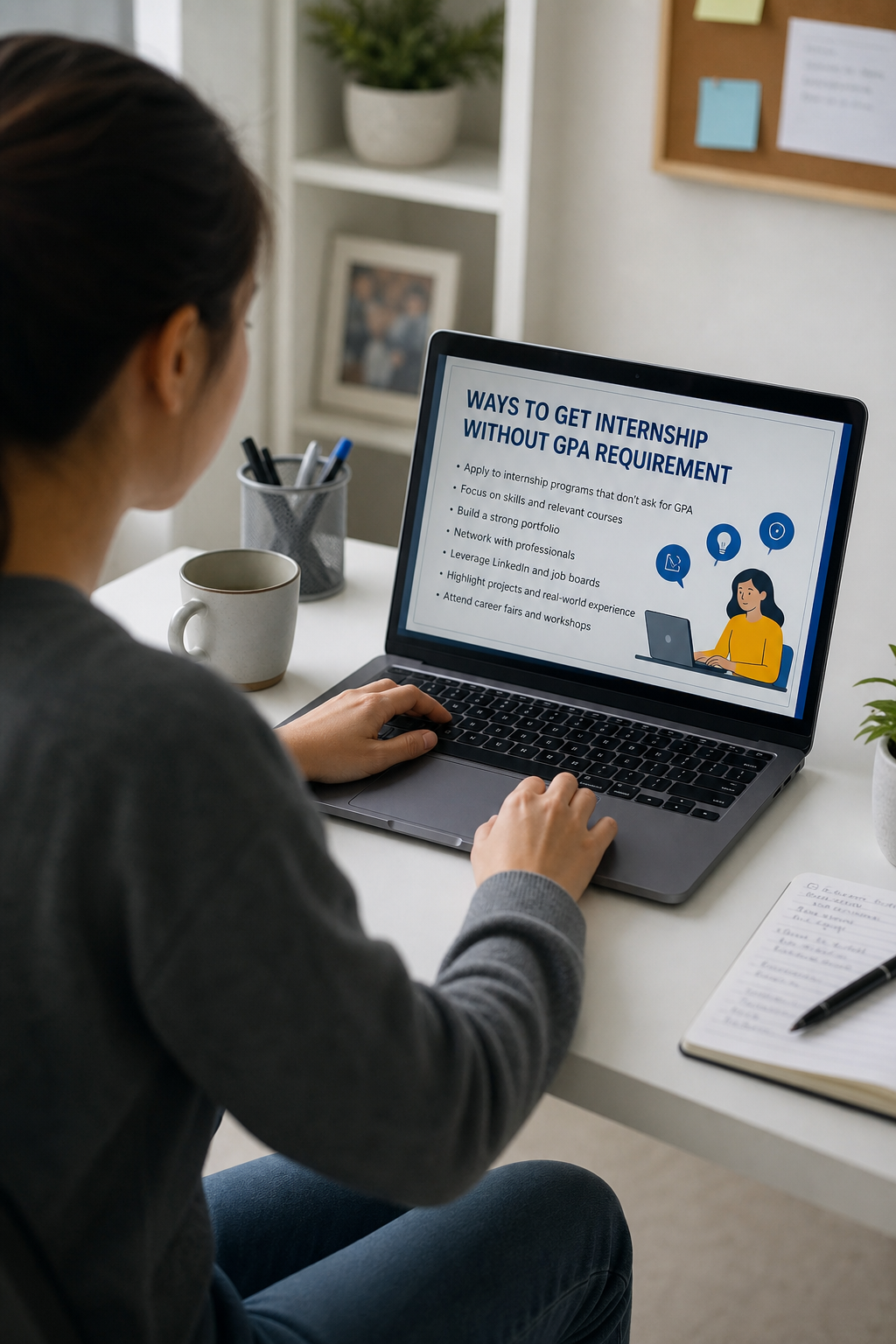
But how do you network when you’re a student? Start with people you already know. Professors, family friends, and alumni from your school. Ask for a 15-minute chat about their job. Most people say yes.
Use LinkedIn. Send a polite message: “Hi, I’m a student interested in your field. Could I ask you three questions about your work?” Be specific. Don’t ask for a job. Ask for advice.
Attend career fairs and campus events. Even if you feel shy, force yourself to talk to three recruiters. Prepare one question: “What skills do your best interns have?” They’ll remember you.
| Channel | Effort | Conversion Rate | Best For |
|---|---|---|---|
| LinkedIn outreach | Medium | High | Finding industry contacts |
| Career fairs | High | Medium | Getting face time with recruiters |
| Alumni networks | Low | Very high | Referrals to hidden opportunities |
| Informational interviews | Medium | High | Learning company culture |
Also, join student clubs related to your field. You meet peers who might share leads. And professors often know of opportunities that aren’t posted publicly.
Pro Tip: After every conversation, send a thank-you note within 24 hours. Mention one thing you learned. This builds a real connection.
One study found that internships are often filled before they’re posted. Networking gets you into that hidden market.
Set a goal: one networking conversation per week for a month. Track who you talk to and what you learn. Over time, you’ll build a web of supporters who can vouch for you.
Bottom line: Networking lets you bypass GPA filters because people hire whom they know and trust, not a number on a transcript.
Step 3: Craft a GPA-Optional Resume and Cover Letter
Your resume doesn’t have to show your GPA. You can leave it off. Employers won’t assume it’s low; they’ll focus on what’s there.
Follow the advice from Indeed’s guide to writing an internship resume. Instead of GPA, highlight projects, leadership roles, and relevant coursework.
Use a skills-based resume format. List skills at the top: communication, data analysis, web development, and social media management. Then back each skill with a bullet point from a project or class.
For example:
- Analyzed sales data for a class project using Excel and created a dashboard.
- Led a team of 4 in designing a marketing campaign for a mock product.
These bullets show what you can do, not what grade you got.
In your cover letter, don’t mention GPA. Instead, tell a story. Talk about a challenge you faced and how you solved it. Connect that to the internship.
73%of employers say they care more about experience than GPA when hiring interns.
You can also add a “Projects” section before education. That way, the eye goes to your work, not your grades.
Another trick: list relevant coursework instead of GPA. For a marketing internship, include courses like “Consumer Behavior” and “Digital Marketing.” It shows you have background knowledge.
Key Takeaway: A resume that focuses on skills and projects, not GPA, is your ticket to an interview.
Proofread everything. A single typo can sink you. Use free tools like Grammarly.
Also, see Building a Standout Resume with Little to No Work Experience for more tips.
Bottom line: By omitting GPA and emphasizing skills and project work, you create a resume that passes recruiter screens and focuses on your capabilities.
Step 4: Target Companies That Don’t Filter by GPA
Some companies automatically screen out low GPAs. Others don’t care. Your job is to find the ones that don’t.
Start with big tech companies like Google, Apple, and Microsoft. Many of them have removed GPA from early screening. They focus on skills and behavioral interviews. Also consider startups, they’re often more interested in what you can do than what your transcript says.
Look for programs that explicitly say they don’t consider GPA. Some examples: Youth Conservation Corps, Chicago Summer Business Institute, and The Met High School Internship. These are paid too.
Use job boards that let you filter. On WayUp, you can find roles that don’t require a minimum GPA. Also check LinkedIn and Indeed with keywords like “no GPA required” or “internship no minimum GPA.”
Target companies in creative fields like advertising, design, or media. They care more about your portfolio.
Pro Tip: Search for “paid internship without GPA requirement” directly. Use quotes for exact matches.
Geographic restrictions are common. Some programs require you to live in a specific city. But that also means less competition.
Another strategy: apply to small companies. They often have less formal HR processes and are more flexible. Send a direct email to the hiring manager.
Remember, even if a job posting says “minimum 3.0 GPA,” you can still apply. Some recruiters ignore it if the rest of your profile is strong.
Bottom line: By targeting companies that don’t filter by GPA and applying broadly, you increase your chances of landing an internship that values skills over scores.
Step 5: Prepare for Interviews That Focus on Skills
Interviews for GPA-blind internships often skip academic questions. Instead, they test your ability to solve problems and communicate.
Practice behavioral questions. “Tell me about a time you worked in a team.” Use the STAR method: Situation, Task, Action, Result. Prepare 3-4 stories from projects, volunteer work, or classes.
If it’s a technical interview, practice on LeetCode or HackerRank. For marketing, prepare to walk through a campaign. For design, have a portfolio review ready.
82%of hiring managers value problem-solving skills over GPA.
Ask questions too. “What skills do top interns have?” or “What’s the first project I’d work on?” Shows curiosity.
Mock interviews help. Record yourself or practice with a friend. Focus on speaking clearly.
Also, research the company’s culture. If they emphasize growth and learning, mention your willingness to learn new tools.
“The best time to start building skills was yesterday. The next best time is now.”
Your GPA never comes up in most of these interviews. So relax and let your skills shine.
Key Takeaway: Skill-focused interviews level the playing field. With the right preparation, you can outperform candidates with higher GPAs.
For more on career readiness, read How to Choose the Right Career Path When You’re Unsure.
Bottom line: Preparing for skill-based interviews with stories and practice overcomes the lack of a high GPA and demonstrates your real-world abilities.
FAQ
Can I really get an internship if my GPA is below 3.0?
Yes. Many companies don’t require a minimum GPA. Focus on building a portfolio, networking, and targeting GPA-blind programs. Research shows 33 distinct pathways exist, from paid summer programs to self-driven tactics. Your GPA is just one number; it doesn’t define your worth or potential.
Do I have to put my GPA on my resume?
No. You can leave it off entirely. Most employers won’t assume it’s low. Instead, highlight projects, leadership roles, and relevant coursework. If your GPA is above 3.5, you can include it, but it’s not required for most roles.
What should I put on my resume instead of GPA?
Focus on skills, projects, volunteer work, and extracurriculars. Use a skills-based format. List technical skills like Python, Excel, or social media tools. Include bullet points that describe accomplishments. For example: “Designed a website for a student club using WordPress.”
How do I find internships that don’t require a GPA?
Use job boards with filters. Search for “no GPA required” on LinkedIn, Indeed, or WayUp. Also, check company career pages for programs that focus on skills over grades. Look for programs like Youth Conservation Corps or those in tech and creative fields.
Will unpaid internships hurt my chances?
Unpaid internships can still provide valuable experience and resume lines. However, many paid internships exist without GPA requirements. Weigh the financial burden. If you can afford to be unpaid, it’s still a way to get your foot in the door. But prioritize paid options first.
How important is networking compared to GPA?
Networking is often more important. Employee referrals have the highest conversion rate. A personal connection can bypass GPA screening entirely. Start building your network now with informational interviews and LinkedIn outreach.
What if I have no projects or experience?
Start small. Volunteer for a nonprofit, create a mock project, or take an online course with a certificate. Even one project shows initiative. Use free resources like Codecademy or Google’s Digital Garage to build skills quickly.
Can I apply to internships that require a minimum GPA even if I don’t meet it?
Yes. Many recruiters use GPA as a soft filter. If your application stands out in other ways, they may overlook the number. Apply anyway. The worst they can say is no.
Conclusion
You don’t need a perfect GPA to land a great internship. The five ways to get an internship without a GPA requirement we covered, building a portfolio, networking, crafting a strong resume, targeting GPA-blind companies, and preparing for skills-focused interviews, are proven strategies used by many students.
Start with one step today. Maybe it’s creating a portfolio site and or sending one LinkedIn message. Small actions add up.
Remember, employers want proof that you can do the work. Your GPA is a number from the past. Your skills and drive are your future.
For more practical advice, check out Do Exams Measure Real Knowledge? which challenges how we evaluate skills. Also see Boost Your Focus: Proven Techniques for More Effective Studying to improve your learning.
You’ve got this. Start applying today. The internship you want is waiting for you.