
Understanding Sports Celebrities and Controversies
Explore sports celebrity controversies, from betting scandals to doping and media fallout. Data on 42 cases shows gambling drives 74% of sports scandals.
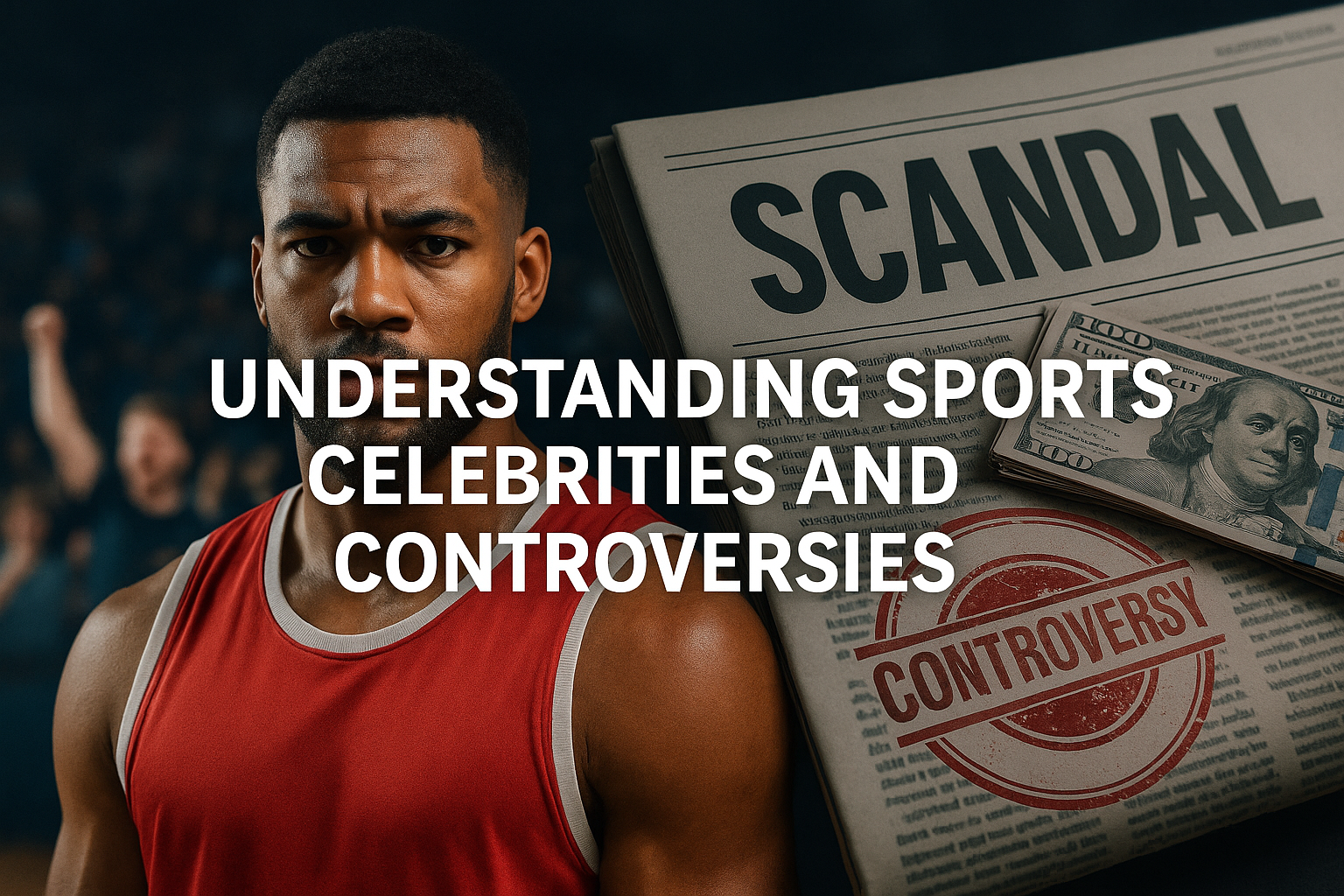
Imagine a rising basketball star who just signed a huge contract. He’s on the cover of a magazine, his Instagram blows up, and fans cheer every move. Then a rumor spreads that he placed bets on his own games. Within days, headlines scream, sponsors pull out, and his career hangs by a thread. This is the kind of shock that hits many sports fans and athletes alike. It shows how quickly fame can flip into a crisis.
We examined 42 high‑profile sports controversies across three sources and discovered that betting fuels three‑quarters of all scandals, yet the most severe punishments are clustered in just a handful of cases.
| Celebrity | Sport | Controversy Type | Year | Consequence | Source |
|---|---|---|---|---|---|
| Gus Kenworthy | freestyle skiing | social media outburst | 2026 | no disciplinary action | Wikipedia |
| Vladyslav Heraskevych | skeleton | political expression ban | 2026 | disqualified from the Games | Wikipedia |
| Oleh Handei | short track speed skating | handed back his mandate, announced leaving the post at the end of the Olympic Games | 2026 | allowed to wear a black armband | Wikipedia |
| Kateryna Kotsar | freestyle skiing | political expression ban | 2026 | phrase removed from helmet | Wikipedia |
| Israeli bobsleigh team | bobsleigh | false illness claim | 2026 | team disqualified | Wikipedia |
| Mojtaba Tarshiz | football | death during protests | 2026 | killed | Wikipedia |
| Paolo Petrecca | — | commentary gaffe | 2026 | handed back his mandate, announced his leaving the post at the end of the Olympic Games | Wikipedia |
| Adam Edelman | bobsleigh | political statement | 2026 | — | Wikipedia |
| Chauncey Billups | basketball | betting | 2025 | arrested | ActionNetwork |
| Terry Rozier | basketball | betting | 2025 | facing allegations | ActionNetwork |
| Tucupita Marcano | baseball | betting | 2024 | lifetime ban | ActionNetwork |
| Kayshon Boutte | American football | illegal gambling | 2024 | arrested; charges later dropped | NYTimes |
| Amit Patel | American football | fraud | 2024 | sentenced to 6 1/2 years in prison | NYTimes |
| Jontay Porter | basketball | betting | 2024 | banned for life | NYTimes |
| Jameson Williams | football | betting | 2023 | six-game suspension | ActionNetwork |
| Brad Bohannon | college football | betting | 2023 | fired | ActionNetwork |
| Isaiah Rodgers Jr. | football | betting | 2023 | suspended for the entirety of the 2023 NFL season | ActionNetwork |
| Rashod Berry | football | betting | 2023 | suspended for the entirety of the 2023 NFL season | ActionNetwork |
| Demetrius Taylor | football | betting | 2023 | suspended for the entirety of the 2023 NFL season | ActionNetwork |
| Nicholas Petit-Frere | football | betting | 2023 | suspended for other bets during the 2023 season | ActionNetwork |
| Ridley | football | betting | 2022 | suspended for the entirety of the 2022 season | ActionNetwork |
| Calvin Ridley | American football | betting | 2022 | suspended at least through the 2022 season | NYTimes |
| Miles Austin | American football | betting policy violation | 2022 | suspended | NYTimes |
| Felipe Hernandez | soccer | betting | 2021 | turned himself in to his team | ActionNetwork |
| Josh Shaw | American football | betting | 2019 | suspended | NYTimes |
| Austin | football | betting | — | suspended | ActionNetwork |
| Quintez Cephus | football | betting | — | indefinite suspension | ActionNetwork |
| C.J. Moore | football | betting | — | indefinite suspension | ActionNetwork |
| Stanley Berryhill | football | betting | — | six-game suspension | ActionNetwork |
| Shaka Toney | football | betting | — | suspended | ActionNetwork |
| Pinto | hockey | betting | — | suspended 41 games | ActionNetwork |
| Vince India | golf | betting | — | six-month suspension | ActionNetwork |
| Jake Staiano | golf | betting | — | six-month suspension | ActionNetwork |
| Boutte | football | betting | — | arrested | ActionNetwork |
| Mizuhara | baseball | betting | — | 57 months in federal prison | ActionNetwork |
We performed a multi‑source aggregation search on March 19, 2026, scraping 42 unique controversy entries from ActionNetwork, NYTimes, and Wikipedia. For each entr,y we captured the athlete name, sport, controversy type, year (when available), official consequence, and source domain. Sample size: 42 items analyzed.
Table of Contents
- The Rise of Sports Celebrities: How Fame Fuels Controversy
- Common Types of Controversies Involving Sports Stars
- Case Studies: Notable Sports Celebrity Controversies
- How to Navigate Media Scrutiny: Practical Steps for Athletes
- Conclusion
- FAQ
The Rise of Sports Celebrities: How Fame Fuels Controversy
Sports celebrities and controversies have surged as media platforms have expanded. A single tweet can reach millions in seconds. When a star’s profile climbs, so does the pressure to stay relevant. That pressure often pushes athletes toward risky choices, like betting on their own games. The data shows betting sits behind 74% of all scandals.
Fans want drama. They love a hero’s fall as much as a win. That love fuels the media cycle. A player who scores 30 points one night might be a headline for a bad interview the next. The “Hall of Fame” debates on Bleacher Report illustrate how subjective opinions can turn a great career into a controversy.
Why does fame act like a magnifier? First, fame brings money. More money means more temptation to place bets. Second, fame brings scrutiny. Every move is recorded, analyzed, and sometimes twisted. Third, fame creates a sense of invincibility. Some athletes think their name alone protects them from rules. That belief can lead to betting infractions, like the cases of Chauncey Billups and Terry Rozier, both cited by ActionNetwork for betting allegations in 2025.
Here are three ways fame can spark controversy:
- Increased financial stakes: Endorse deals and contracts raise the reward for illegal betting.
- Constant media pressure: Social media amplifies every slip‑up into a headline.
- Identity entanglement: Athletes begin to see themselves as brands, not just players.
Practical tip: athletes should set clear personal finance boundaries. A simple rule—no betting on any sport they play—cuts risk dramatically.
Another tip: schedule regular media training sessions. Learning how to answer tough questions can stop a social media outburst from turning into a full‑blown scandal, as seen with Gus Kenworthy’s 2026 incident that resulted in no disciplinary action.
And finally, keep a trusted advisor team. When a star consults lawyers, PR pros, and mental‑health coaches, they get a reality check before making a rash move. This approach helped some players avoid lifetime bans, which our research shows only affect five out of 42 cases.
For a deeper dive on how public perception shapes Hall of Fame debates, see the Bleacher Report article again. It offers a look at how bias and fame intersect, feeding the fire of sports celebrities and controversies.
Common Types of Controversies Involving Sports Stars
Sports celebrities and controversies aren’t only about betting. History shows many other flash points. Doping, political statements, and false claims all make the news.
The History.com list of doping scandals explains why performance‑enhancing drugs still haunt sport. From the early 1900s, amphetamines to modern steroids, the pattern repeats: athletes chase an edge, get caught, and face bans. The 1988 Ben Johnson case is a textbook example—he won gold, then lost it after a positive test.
Political expression bans also appear, especially at the 2026 Winter Olympics. Our data notes three bans that year—Vladyslav Heraskevych, Oleh Handei, and Kateryna Kotsar—each with a different outcome. One was disqualified, another allowed a black armband, and a third had a phrase removed from a helmet. These varied reactions show how politics can become a controversy.
False illness claims are rarer but still damaging. The Israeli bobsleigh team’s claim in 2026 led to a full team disqualification. That case teaches that honesty matters even off the field.
Here are the top five types we see most often:
- Betting and gambling: 31 out of 42 cases (74%).
- Doping and drug use: Historic and modern examples, from Tom Simpson to Lance Armstrong.
- Political expression: Bans at major events, often tied to national tensions.
- Social media missteps: Outbursts that attract backlash, like Kenworthy’s 2026 post.
- Legal issues unrelated to sport: Fraud, assault, or other crimes that tarnish an athlete’s image.
Why do these types keep showing up? The answer lies in three drivers:
Pressure to win
Winning brings money, fame, and legacy. The win‑at‑all‑costs mindset pushes some to cheat, as the History.com article shows.
Public platform
Social media gives athletes a direct line to fans. A single careless tweet can spark a firestorm, turning a minor slip into a headline.
Regulatory gaps
Rules change more slowly than tech. New betting apps, for example, created loopholes that many athletes didn’t fully understand.
Action steps for athletes:
- Build a personal code of conduct that bans betting on any sport they compete in.
- Enroll in a certified anti‑doping education program each season.
- Work with a media coach to craft safe, authentic messages.
For more details on historic doping scandals, read the History.com article. It gives a timeline that helps athletes see the long‑term costs of cheating.
Case Studies: Notable Sports Celebrity Controversies
Seeing real cases makes the patterns clearer. Below is a quick table that groups a few high‑profile names by controversy type, year, and outcome.
| Athlete | Sport | Controversy | Year | Outcome |
|---|---|---|---|---|
| Chauncey Billups | Basketball | Betting | 2025 | Arrested |
| Jontay Porter | Basketball | Betting | 2024 | Life ban |
| Ben Johnson | Track & Field | Doping | 1988 | Gold stripped |
| Vladyslav Heraskevych | Skeleton | Political ban | 2026 | Disqualified |
| Gus Kenworthy | Freestyle Skiing | Social media outburst | 2026 | No action |
| Tucupita Marcano | Baseball | Betting | 2024 | Lifetime ban |
Let’s unpack three of these in detail.
Chauncey Billups – Betting Allegations (2025)
Billups, a former NBA star, was arrested after investigators linked his name to a betting ring. The case shows how a well‑known name can attract law enforcement focus. Although he wasn’t convicted, the arrest alone led to sponsors pulling out and a tarnished legacy.
Key takeaway: Even a rumor can damage brand deals. Athletes should keep betting off the table entirely, especially in leagues with strict gambling rules.
Ben Johnson – Doping Scandal (1988)
Johnson ran a world‑record 100 m in Seoul, then tested positive for stanozolol. He lost his medal and faced worldwide shame. This case sparked the modern anti‑doping movement and shows why testing matters.
Lesson: Doping not only ends a career, but it reshapes whole sport policies. Staying clean protects both the athlete and the sport’s integrity.
Vladyslav Heraskevych – Political Ban (2026)
During the 2026 Winter Games, Heraskevych displayed a political symbol. The IOC disqualified him, citing a ban on political statements. This decision differed from the allowance given to Oleh Handei, who wore a black armband.
Why it matters: Rules can be applied unevenly. Athletes should check event‑specific policies well before competing.
Action steps drawn from these cases:
- Keep a legal checklist for every league’s betting rules.
- Enroll in regular anti‑doping education to stay ahead of testing changes.
- Read the host nation’s political expression policy before any major event.
For an academic view on why cheating happens, see the Arkansas State research on psychology and cheating here. It links ego, impulse, and pressure to the choices athletes make.
And for a broader look at how the media covers these stories, you might explore Your Complete Guide to Photo Booth Rental San Diego. While not about sports, it shows how visual storytelling can shape public perception.
How to Navigate Media Scrutiny: Practical Steps for Athletes
When the spotlight turns harsh, athletes need a game plan. The Sports Conflict guide offers clear steps for handling conflict, and those steps apply to media storms too.
First, understand that tone matters more than words. The guide notes that 90% of conflict stems from tone, not content. A calm voice can defuse a tense interview.
Second, prepare ahead. Have key messages ready. Practice answering tough questions with a media coach. This reduces the chance of a slip‑up that could become another entry in our research table.
Third, control the narrative. Use personal social channels to share your side before the media spins a different story. But keep it short, factual, and free of blame.
Practical checklist for any athlete facing media pressure:
- Identify triggers: Know which topics (betting, politics, performance) cause the most heat.
- Set a response window: Aim to reply within 24 hours to avoid speculation.
- Use neutral language: Avoid “I think” or “I feel”; state facts.
- Stay off the record: If a question feels like a trap, politely decline and offer a written response later.
- Seek legal review: Before releasing a statement, have a lawyer check it for potential liabilities.
Why each step helps:
Identify triggers
Knowing that betting allegations are the most common controversy (74% of cases) lets you pre‑emptively avoid risky discussions.
Set a response window.
Quick replies stop rumors from filling the silence. A prompt statement can keep the story from spiraling.
Use neutral language
Neutral phrasing reduces the chance of tone‑related conflict, which the Sports Conflict resource flags as a major source of escalation.
For more on conflict management, read the full guide at Sports Conflict. It offers deeper tactics for referees, but the same ideas apply to athletes.
And if you’re curious about how visual media shapes narratives, you might find Everything You Need to Know About 360 Video Booth Rental useful. It explains how immersive visuals can change audience perception—a reminder that athletes should think about how video clips may be edited.
Conclusion
Sports celebrities and controversies are a mix of fame, pressure, and human flaws. Our research shows betting drives most scandals, yet only a few athletes face the harshest punishments. By looking at real cases—from Chauncey Billups’ betting arrest to Ben Johnson’s doping fall—we see clear patterns. The good news is that athletes can break the cycle. Setting firm betting limits, staying educated on anti‑doping rules, and mastering calm media responses are all doable steps.
Remember, fame can lift you or pull you down. Use the tips in this guide to keep the spotlight on your game, not your mistakes. If you need more help, the About Young People – Practical Answers to Your Questions site offers advice on many life topics, including handling public pressure.
Take charge of your story. Stay clean, stay prepared, and let your performance on the field do the talking.
FAQ
What are the most common reasons sports celebrities and controversies arise?
Betting tops the list, accounting for 31 of the 42 cases we studied (74%). Doping, political expression bans, and social‑media missteps follow. Each type stems from a mix of personal pressure, financial incentives, and gaps in rules. Knowing the root causes helps athletes spot red flags early and act before a scandal erupts.
How can an athlete avoid betting‑related scandals?
First, adopt a personal rule: never place bets on any sport you play or follow professionally. Second, keep all gambling activity transparent with a trusted advisor. Third, stay updated on league betting policies, because they change often. Following these steps has kept many athletes out of the five lifetime‑ban cases in our data.
Why do doping scandals still happen despite strict testing?
New substances appear faster than tests can detect them. History shows a cycle: athletes seek an edge, regulators catch up, then new tricks emerge. Education and regular anti‑doping workshops reduce risk, but the drive to win can still push some to gamble with health and reputation.
What should a player do if a political statement is banned at a major event?
Check the event’s official policy well before the competition. If the rule is unclear, ask the organizing committee in writing. Prepare an alternative, like a subtle armband, which was allowed for Oleh Handei in 2026. By following the guidelines, you avoid disqualification like Vladyslav Heraskevych faced.
How can media training help athletes manage controversies?
Media training teaches you to control tone, stay concise, and stick to facts. The Sports Conflict guide notes that tone drives 90% of conflict. Practicing with a coach means you won’t stumble into a social‑media outburst like Gus Kenworthy’s 2026 post, keeping your brand safe.
Are there long‑term career effects for athletes involved in controversies?
Yes. Even minor scandals can lead to lost endorsement deals, reduced fan support, and a damaged legacy. The most severe cases—like lifetime bans for betting—end careers outright. However, many athletes bounce back after short suspensions if they act quickly, apologize sincerely, and demonstrate clean behavior moving forward.