
Overcoming Procrastination
Beat procrastination with simple, proven habits: spot triggers, break tasks into small steps, and use Pomodoro timers to build focus and momentum.
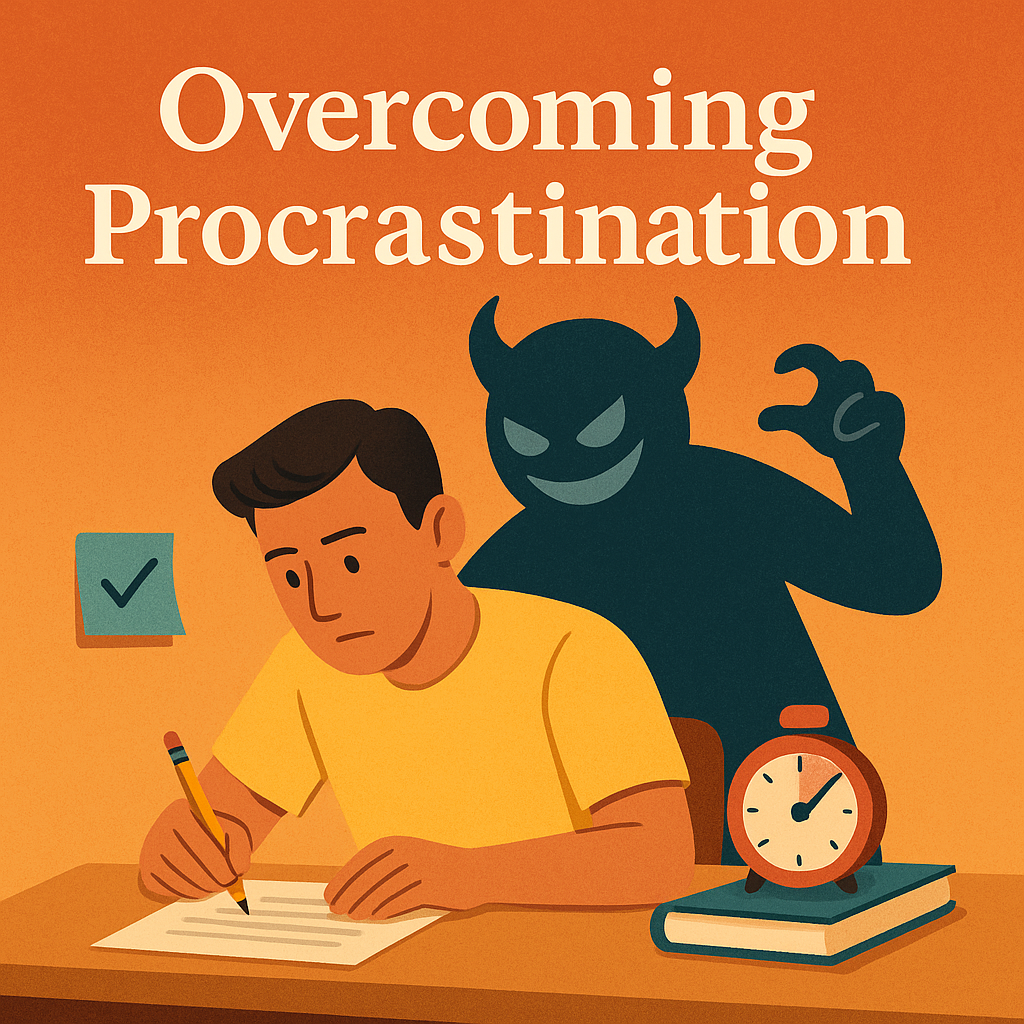
Procrastination feels like a sneaky thief that steals your plans the moment you sit down.
It tells you you’ll get to it later, and later never shows up. The good news? You can lock that thief out with a few simple tricks.
First, break big tasks into bite-sized steps. Instead of “write my term paper,” try “outline one paragraph.” Tiny wins build momentum and make the mountain look like a hill.
Second, set a timer for just 10 minutes. When the timer rings, decide whether to keep going or take a short break. This “micro‑focus” habit keeps the brain from drifting.
Third, clear the clutter around you. Put your phone on silent, close unrelated tabs, and keep only what you need on your desk. A clean space cues a clear mind.
For students juggling classes, part‑time jobs, and a social life, a quick tweak to their schedule can help. Imagine you have a 2‑hour study block on Tuesday. Write down exactly what you’ll do in each 30‑minute chunk: read notes, do practice questions, review flashcards. Seeing the plan laid out makes it harder to avoid.
Need a ready‑made tool to keep the timer ticking? Check out this Pomodoro timer guide that walks you through setting intervals and breaks.
And if you’re worried that a short work history will hold you back, our advice on building a standout resume with little to no work experience shows how to turn school projects and volunteer work into strong proof of skill.
Start by picking one of these habits today. Write it down, try it for a week, and watch the procrastination monster lose its power.
Step 1: Identify Your Procrastination Triggers
Procrastination isn’t random – it hides behind clear cues.
First, pause and ask yourself what you’re feeling right before you put something off. Is it boredom? Fear? Maybe the task feels too big. Write that feeling down in a quick note.
Next, look at where you are. A noisy room, a buzzing phone, or an open social feed can pull you away. Spot the spot that steals your focus.
Try a simple habit: for one day, jot a tiny log each time you skip a task. Note the time, the task, and the excuse that popped up. After a few entries, you’ll see a pattern.
Notice if certain subjects or types of work trigger the same excuse. College students often dodge long essays but dive into short quizzes. Gen Z folks might scroll TikTok instead of updating a CV.
Does your phone feel like a friend or a foe? Your Phone in Class: Ultimate Distraction or Secret Weapon? explores that line and can help you decide if you need a silent mode.
Once you map the feelings, places, and excuses, you’ve got a trigger list. That list is your map out of the procrastination maze.
And if one of those triggers is the job hunt, consider a tool that speeds up the process. EchoApply’s AI‑powered CV and interview prep can cut the time you spend worrying about applications, so the delay shrinks.
Take the next 24 hours to track three moments you felt the pull to delay. Write them down, match them to a trigger, and you’ll see the first step to beating the habit.
Step 2: Break Tasks into Manageable Chunks
Big goals feel impossible until you cut them up.
Your brain loves a tiny win. When you finish a small step, it sends a burst of dopamine, the same feel‑good chemical that pops up when you get a text reply. That little hit tells your mind, “Yes, I can do this,” and it wants more.
Research on the science of micro‑tasks shows that splitting a big job into 15‑30 minute pieces reduces stress on the prefrontal cortex and keeps motivation steady. Your mind works best when it sees a clear, short path instead of a huge, vague mountain.

Here’s a simple way to start: pick the big task you’re avoiding, then write down three tiny actions you can do in the next half hour. For an essay, that might be “open the assignment page,” “write a one‑sentence thesis,” “type the first paragraph heading.” Each chunk is easy enough that you can finish it without feeling stuck.
Next, turn those chunks into a visual board. Use index cards or a phone note app. Put the cards in order, then pull the top one and work until it’s done. When you flip the card, you get a visible sign of progress, and the dopamine hit keeps the flow going.
Finally, protect the flow. Set a timer for the length of your chunk, close unrelated tabs, and put your phone on silent. When the timer rings, decide if you want to keep going or take a short break. That rhythm of work‑pause‑work builds a habit that beats procrastination.
Action steps:
- Write down one big task you need to finish.
- Break it into 15‑30 minute pieces – aim for three pieces today.
- Create a simple card or note for each piece.
- Use a timer, work on the first card, then move on.
Give this a try this week. You’ll see how tiny steps turn a mountain into a series of easy hops, and that’s a core part of overcoming procrastination.
Step 3: Use the Pomodoro Technique Effectively
Now you have a task broken down and a timer ready. The Pomodoro method can turn those tiny steps into steady progress.
First, set a “safe expectation” – choose a time block that feels 100% doable. For most students, 15‑20 minutes works. You focus on one chunk, then stop when the timer dings.
Re‑evaluate before you roll.
When the alarm rings, ask yourself: how am I feeling? If you’re still in the zone, you can set another safe block. If you’re drained, give yourself a proper break.
This quick check‑in keeps you from pushing too hard and helps you spot when the task is actually done.
Recovery that fits you
Breaks don’t have to be boring. Stretch, grab a snack, or scroll through a few fun posts. The goal is to let your brain reset, not to start a new project.
For neurodivergent students, a short dance or a quick walk can boost dopamine and make the next Pomodoro feel easier.
Want a deeper dive on how to tweak the Pomodoro for different brains? Check out the modified Pomodoro guide for practical tips.
Quick checklist
- Pick a safe time slot (15‑20 min).
- Work on one chunk until the timer ends.
- Re‑evaluate: keep going or take a break?
- Choose an active or restful recovery activity.
- Repeat or move to the next chunk.
By treating each Pomodoro as a mini‑experiment, you stay in control and avoid the overwhelm that fuels procrastination.
| Step | What to Do | Why It Helps |
|---|---|---|
| Set Safe Expectation | Pick a short, doable time block | Reduces anxiety, builds confidence |
| Re‑evaluate | Ask how you feel after each block | Prevents burnout, adapts effort |
| Recover | Do a quick stretch, snack, or fun scroll | Refreshes brain, restores focus |
Need more ideas on staying on track while you study? Practical Guide to Relationships and Social Life for Youths shares how small habits can boost motivation across school and life.
Conclusion
You’ve seen how tiny steps, a safe timer, and a quick reset can keep the procrastination thief at bay.
Pick one chunk today. Set a 15‑minute timer. When it rings, ask yourself if you feel good to keep going or need a stretch. That tiny check‑in stops the panic and builds confidence.
Remember, the goal isn’t perfection; it’s momentum. Each mini‑experiment teaches your brain what works and what doesn’t.
If you need more real‑life tips, the About Young People platform offers simple guides that fit a busy college schedule.
So, what’s the next move? Grab a notebook, write the first micro‑task, and start the timer. In a few days, you’ll notice the habit pulling the thief away for good.
Keep tracking your feelings after each block; the pattern will show you where to tweak the length or the break activity.
With practice, the habit becomes second nature, and the stress of starting fades away.
FAQ
How can I stop the procrastination thief when I feel stuck?
When you hit a block, give yourself a five-minute sprint. Set a timer, open the file, and just write any line – even if it’s nonsense. That short push often breaks the freeze and gets the brain moving. After the timer, step back, read what you wrote, and decide if you want another sprint or a short break. The key is to act before the mind convinces you to quit.
What’s the best timer length for a college student?
A lot of students find 15-minute blocks work best. It’s short enough to feel safe, but long enough to make real progress. Start with a timer set for 15 minutes, focus on one tiny task, then pause. If you feel good, you can add another block; if you’re tired, take a quick stretch. The goal isn’t to push hard; it’s to build a rhythm you can stick to.
How do I deal with distractions like phone notifications?
First, list the apps that pull you away – social, games, news. Then turn on Do-Not-Disturb or use the phone’s focus mode while you work. Put the device face down or in another room if you can. If you need it for a task, open only the needed app and close the rest. A clean phone set-up removes a big cue that fuels procrastination.
Can breaking a big project into tiny steps really help?
Yes. When a task looks huge, the brain sees it as scary and shuts down. Splitting it into three or four bite-sized actions gives the mind a clear path. Pick the first tiny step, finish it, then move to the next. Each completed piece sends a small reward signal, which makes you want to keep going. Over time, the big job feels like a series of easy hops.
What should I do if I still feel anxious after a Pomodoro?
If anxiety pops up after a Pomodoro, pause and do a quick reset. Try a 30-second breath count: inhale for four beats, hold one, exhale three. Move your body with a stretch or a short walk. Write down what made you uneasy – maybe a fear of not being perfect. Seeing the worry on paper often reduces its power, letting you start the next block with a calmer mind.
How often should I review my progress to keep the habit going?
Give yourself a quick weekly check-in. Grab your timer log or notebook and look at how many blocks you completed, how you felt, and where you got stuck. Note any patterns – maybe you work best in the afternoon or need longer breaks after two blocks. Adjust your plan based on those notes and set a small goal for the next week. Regular tweaks keep the habit fresh and strong.